« May 2011 | Main | July 2011 »
Article: How to make your strategy stick with a strategic story
Filed in Business storytelling, Changing behaviour, Strategic clarity.
Ben Horowitz, entrepreneur and investor1
Steve Jobs bounces onto the stage and grabs the slide changer from his colleague with a friendly “Thanks Scott”. He’s looking thin and grey, illness having taken its toll, but his energy remains boundless. It’s the 2011 Apple Worldwide Developers Conference and Steve is about to announce a change in strategy for his company. The 1000-plus crowd cheers as he steps into the spotlight and then falls silent, hanging on his next utterance.
“About 10 years ago we had one of our most important insights, and that was the PC was gonna become the digital hub for your digital life.” With these words, Steve begins his strategic story.
A recent global study of 450 enterprises found that 80% of those companies felt their people did not understand their strategies very well.2 It’s the dirty little secret shared by so many companies: ask any employee about your strategy, including the executive team, and they’ll lunge for a document that tells them. It’s rarely embedded in their minds and, as a result, the espoused strategy does not influence day-to-day decision-making. Given the effort applied to strategy development, there is a massive disconnect here. The opportunity to reconnect a firm with its strategy lies in how this strategy is communicated and understood.
There are a number of ways of conveying your organisation’s strategy. A popular approach is to craft a beautiful-looking PowerPoint presentation and email it to all your team leaders, with instructions to present it to their teams. The head of strategy for one Australia’s iconic brands once told me he happened to sit in on one of these talks and witnessed a team leader presenting a slide pack. It went something like this: “OK, HQ has asked me to tell you about (clicks to the first slide) … ah yes, our strategy. (clicks to the next slide and reads out the contents, then clicks again, pauses, and says:) Not sure what this means …” (clicks to the next slide). The audience slid into boredom. The talk failed to engage the team and left them none the wiser about the strategy and why the company was taking that approach. In fact, they were probably more cynical about and disengaged from the company than they had been before they’d sat down.
So sure, emailing a slide pack is easy, but in most cases it’s next to useless. It often achieves the opposite of what you want.
Another popular method is the CEO roadshow. The CEO visits each company site and presents the slide pack herself. This act is symbolic. It shows that the CEO really cares about the strategy and wants everyone to know about it, so it must be important. The audience watches intently to see how she presents the strategy, to see if she really believes it, if she really cares about it. Of course, the CEO is also there to answer questions, but no-one dares ask one in such an open forum.
Sadly, the result is often similar to what was observed by the head of strategy mentioned earlier. In kicking off a strategy session, a department head at a well-known bank asked a roomful of people, “So, who can tell me about our strategy?” Nothing. “OK, just one of the 12 items then.&rldquo; Still nothing. “So, no-one can remember any of the 12 things I have just travelled around all our sites talking about?” Silence.
Slide pack-driven presentations typically contain lots of bullet points and graphs and facts, but because these are not presented within an overarching narrative, it’s hard for the audience to join the dots. The audience forgets the information almost as soon as it files out of the auditorium because the presentation lacks a memorable story.
A key question people often ask when they hear about a new strategy is “Why?” “Why are we focusing on acquisition?” “Why are we outsourcing?” “Why are we demoting the Mac to the level of an iPhone or iPad?” A story best answers these “Why?” questions because it tells us what caused the change and what’s going to happen next – the strategy. A story provides the context for a strategy, making it meaningful and allowing it to connect with other company stories employees may have in their minds.
Here’s an example of a strategic story that was told to me at an executive story training session for a telecommunications company in Malaysia. The organisation’s leader was listening to my explanation of a strategic story when he suddenly jumped up and said: “I get it. Here’s our story. Over the last 10 years we’ve been focused on building mobile coverage. Our revenues have steadily increased but our infrastructure costs are rising faster. In 2 years time our infrastructure costs will exceed revenue. That’s why we’re now moving to collaborate and share infrastructure with our competitors and putting our efforts into competing on what runs on our mobile network.”
Why was this company collaborating with their competitors on infrastructure? Because its infrastructure costs were going through the roof. A simple yet effective story helped us understand why.
Strategic stories are powerful because people can picture them, remember them and retell them. Well-developed stories not only answer the “Why?” questions but also convey emotion in a way that inspires people to take action in accordance with the new strategy.
Developing an effective strategic story requires some work, primarily by the members of the executive team, who will often have a variety of views about what the company strategy actually is. It’s crucial that the responsibility for the story is not outsourced to the strategy department or, even worse, given to a creative agency. The leaders of the company must firstly clarify their own understandings of the strategy. They must then own both the strategy and the story that communicates it. Finally, they must not merely be comfortable telling that story – they must relish doing so.
One of the challenges faced by executives is to overcome the desire to get the words of the story absolutely perfect, as if the next Pulitzer Prize winner is being written. The story should instead be written to suit oral retellings, where the spine of the story will remain unchanged but the exact wording will be chosen by the speaker. These choices will be guided by the context and purpose of the story telling. Sometimes the telling will be long, sometimes it will be short, or it will focus on one part of the business, or on an internal story, or an external one … Stories have a tremendous capacity for adaptation.
Another challenge faced by executives is the desire to only talk about what’s working well. The problem with that, however, is that a pollyanna story – where everything is good and nothing ever goes wrong – is never believed for long, if at all. Eventually, everyone will see it as merely corporate spin. Steve Jobs does not make this mistake at the developers conference. Part-way through his telling of the strategic story that introduces iCloud, he admits the failings of the now superseded software MobileMe, saying, “It wasn’t our finest hour.”3 The crowd roars with laughter. There is a sense of relief that he hasn’t tried to sweep the failure under the carpet. His strategic story gains credibility.
One of the simplest ways of working out what failings to include in your strategic story is to explore the possible anti-tales that might be told to discredit your story. A key lesson in story work is that you can’t beat a good story with fact; you can only beat a good story with a better story. A strong example of this was provided by a large government department that we helped to develop a strategic story. This department had just merged with another department and their strategic story highlighted the advantages of the integration. When we asked the executives to tell us some anti-stories, they described how the department had attempted another merger a decade ago but it had only lasted a couple of years. They called it the big divorce, and there were still fears that it might happen again. It was clear we needed to face up to that fact in the department’s strategic story.
Once an executive team can tell their strategic story, replete with personal anecdotes that really bring the story to life, they then need to get the rest of their organisation involved in telling it. It’s important to achieve this through both bottom-up and top-down approaches, and to allow for variations of the story to emerge that suit different parts of the business while maintaining the story’s core.
Large company gatherings are a perfect time to introduce a strategic story. Immersing many people in a story at the same time results in an aspect of group psychology called ‘social proof’ – the social pressure that tells us that if other people are doing something, it is safe for us to do the same thing. A large event provides the perfect forum for executives to present their story and for the participants to share their own anecdotes, which can reinforce and illustrate the strategy. This also allows concerns and anecdotes which contradict or undermine the strategic story to surface and be dealt with.
Companies can develop and embed strategic stories at any level of the organisation. There can be a company-wide strategic story or one for a particular business division. CIOs are beginning to invest in developing strategic stories to bring their IT strategies to life so it makes sense for CEOs, other executives and board members.
An organisation’s culture is defined by the stories employees, customers, partners and all the many stakeholders tell. So if you want to change your company’s culture, you must therefore change the stories people tell. Your strategic story will become entwined in your culture, providing an overarching narrative that triggers new stories while also being modified by what happens in the organisation. The strategic story is alive because it is not merely the words that the executive team assemble and speak. Rather, the strategic story is fed by the multitudinous actions people take in the organisation.
Edgar Schein noted nearly a decade ago that there are relatively few things leaders do that inordinately affect organisational culture:4
- what leaders pay attention to, measure and control on a regular basis
- how leaders react to critical incidents and organisational crises
- how leaders allocate resources
- deliberate role modelling, teaching and coaching
- how leaders allocate rewards and status
- how leaders recruit, select, promote and excommunicate.
Each of these actions will trigger stories. Leaders must be mindful that their actions are more important in sustaining a strategic story than anything they say, because when people have a choice between believing a stated strategic story or the actions of their leaders, they will always take more notice of what the leaders do. The message for leaders, then, is that they should align their decisions and behaviours with their company strategy and the strategic story that describes it, or they will see their strategic efforts fail. Strategy implementation is change management.
It’s clear that creating an effective strategic story, one with real impact, involves much more than simply crafting and then telling a compelling story. It involves an executive team developing the strategic story themselves so that they can own it. It involves that team being comfortable with telling the story and weaving their own experiences through it. And most importantly, it involves everyone in the organisation learning and telling their own versions of the strategic story so that they all own it and act to support and build on it.
Steve Jobs paces back and forth across the stage, painting word pictures of where Apple has come from, why a change in strategy is needed, and where the company will now be heading. He talks as if it has already come to pass. Eventually he brings up his last slide, takes a deep breath, and finishes his story: “So that is iCloud.”
References
1. Horowitz, B. 2010, How Andreessen Horowitz Evaluates CEOs, http://www.businessinsider.com/how-andreessen-horowitz-evaluates-ceos-2010-5-2.
2. Vanson Bourne (2011). The link between strategic alignment and staff productivity: A survey of decision-makers in enterprise organisations. http://www.successfactors.co.uk/resources/resource-item/the-link-between-strategic-alignment-and-staff-productivity/
3. Apple WWDC 2011 Keynote Address. http://itunes.apple.com/au/podcast/apple-wwdc-2011-keynote-address/id275834665?i=94705755
4. Schein, E.H. (2004). Organizational Culture and Leadership, 3rd edn, Jossey-Bass Publishers, San Francisco.
Permalink | Comments (2) | TrackBack
Story quote of the week
Filed in Quotes.
Click to see larger version 800x600
Permalink | Comments (0) | TrackBack
The problem with 'motivational speakers'
Filed in .
So called 'motivational speakers' don't motivate people to change behaviour.
Throughout my career I have been involved in organising, planning and developing a huge number of away days, events, conferences and the like. When you start working on ideas for the agenda, more often than not someone will suggest getting a 'motivational speaker' along. This suggestion is normally met with everyone getting very excited, throwing in ideas of who they could get and checking budget to see if it is possible. Everyone that is, except me.
Why am I so resistant to this idea? What it is about the whole concept of 'motivational speakers', whoever they may be, that I just don't seem to get or be enthused by?
Simply put I don't think they do what they say - motivate, and especially motivate people to change.
I have personally seen some fantastic speakers at different events over the years, and heard about many more. People who have achieved amazing feats. People like David Hurst, who was the first blind person to climb Mount Blanc, or Li Cunxin, the sixth of seven sons born to peasants in rural China who became one of the world's greatest dancers. I still remember to this day the stories told by Ben Hunt-Davis about how to 'make the boat go faster' as they were preparing for the Men's Rowing Eights at the 2000 Sydney Olympics, which he subsequently won the gold medal in.
Let's look at Ben Hunt-Davis' presentation in some more detail.
Ben did a fantastic hour long presentation, where he told story after story about how he and his team mates changed from finishing, at best, fourth in European and Olympic events to finally becoming the first British winners of the Men's Rowing Eights since 1912. He told the whole 'big narrative' of the journey to winning the gold medal, as well as telling stories of specific moments along the journey.
The stories were memorable - I can still remember a very specific Barry Manilow song one of his team mates sang when they were preparing for the Olympic final even today. They were entertaining, amusing and told beautifully with all the elements we discuss in our Storytelling for Business Leaders courses about the elements of a great story. People even a year afterwards could still recall some of the stories in a huge amount of detail.
However all of this did not equal motivation to create real change for the audience hearing. It did not mean that three days after the event, when people were back in the office, that it had any impact on their behaviour one little bit.
On the website advertising his speaking services, it states that Ben; "can use his story to greatest effect explaining not only how he achieved his goals but how other can achieve theirs." A bold claim, and one that just doesn't stack up.
I am no way criticising Ben here, you can take your pick of speakers and websites that claim to create motivation by coming to speak at your next event. But what I am challenging is this belief that you will actually get any change in behaviour from having one of these speakers along. There are a number of reasons why I think this is the case.
For a start there is too much of a gap between the sender and the listener. Winning Olympic gold, being a world class dancer, or climbing Mount Blanc while blind are just too far from the understanding and realities of most of the people they will share their stories with. It is too easy for the audience to sit back and say; "that's great, fantastic, but I'm not like them, and they don't know what its like for me". In some ways it almost does the opposite because it doesn't build a key element of personal behaviour change - self efficacy.
Self efficacy is a term coined by renowned psychologist Albert Bandura and relates to a person's belief in their own competence and ability to undertake a task. Hearing one of these speakers does not build self-efficacy and belief that you can achieve something more - it may in fact do the opposite.
Also, although these speakers may create a short burst of inspiration that do not give people a specific set of behaviours to focus on to create change. They can not be role models for the achievement of change in the specific environments they go to speak in, as they are not part of the team / area / organisation.
If people do feel inspired after hearing these people, this inspiration to change, doesn't seem to withstand the twin 'attacks' on voicemails and a full inbox back at work.
So, if you want to be entertained, hear some great, very well polished stories and potentially be inspired, by all means hire one of these speakers. However, if you really want to create change in your organisations please think twice about doing that, and instead focus on say, amplifying the great work someone in your organisation is already doing. Cheaper and a lot more effective in creating real, long term, sustainable change.
Permalink | Comments (13) | TrackBack
Knowing which movie to choose your analogy from
Filed in Business storytelling.
An effective business storytelling tactic is to tell a story from a movie as an analogy. Just pick a film scene that conveys your message and tell it. My walking buddy, Darren Woolley, shared this nice example with me.
Darren's company, TrinityP3, helps marketing departments of large companies around the world solve the trickiest problems. This is how Darren describes what they do.
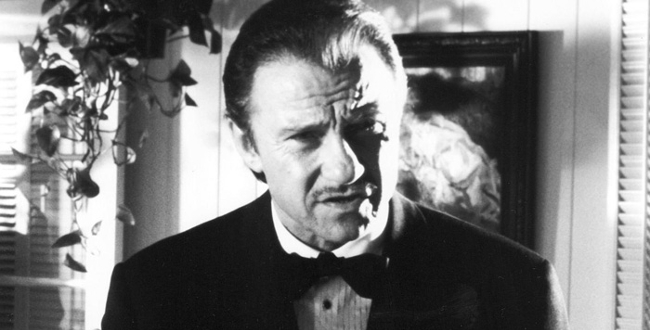
"Do you know the film Pulp Fiction? Remember the scene when Vincent (John Travolta) and Jules (Samuel L. Jackson) are driving and they accidentally shoot their back seat passenger. They drive the blood-splattered car to their friend's Jimmie's house to clean up the mess and get help. Before they know it the door bell rings and Winston "The Wolf" Wolfe is there to save them. Well, at TrinityP3 we are your Winston Wolfe."
Here is Darren's description of the Mr Wolf analogy with the film clip. Tip for the squeamish, don't click through.
One of the reasons why this film analogy works for Darren is that the film is well known. I noticed that Peter Guber advocates the same approach in his book Tell to Win but then uses films such as High Noon. Unless you are a film buff these old classics are just not going to cut it. So how do decide which films to use?
Here is a simple approach.
Visit the IMDB top 250 and select the top 100 records. Copy them into a spreadsheet. Sort by number of votes, because this gives you a list of the most popular movies as well as the top 100 best movies. Popularity is more important.
Here is the top 15 by votes:
- The Shawshank Redemption (1994)
- The Dark Knight (2008)
- Pulp Fiction (1994)
- The Godfather (1972)
- Fight Club (1999)
- The Lord of the Rings: The Fellowship of the Ring (2001)
- The Matrix (1999)
- The Lord of the Rings: The Return of the King (2003)
- The Lord of the Rings: The Two Towers (2002)
- Inception (2010)
- Forrest Gump (1994)
- Star Wars: Episode IV - A New Hope (1977)
- American Beauty (1999)
- Se7en (1995)
- Gladiator (2000)
Notice Pulp Fiction is number 3.
I'd love to hear what analogies you come up with.
Permalink | Comments (0) | TrackBack
Story quote of the week
Filed in .
Click to see larger version 800x600
Permalink | Comments (0) | TrackBack
Sunday mornings is a favourite time of the week for me. I get up early and go walking with my friend Darren Woolley. The conversation is always lively and last Sunday I mentioned to Darren that I thought it was interesting that ambiguous stories seem to linger in my mind much longer than stories with a clear point.
"There is a reason for that," Darren says. "We're always trying to make sense of people's stories and if one is a little ambiguous we'll work a bit harder to work out its meaning. As a result we remember the story."
As soon as Darren said this I was reminded of the Heider & Simmel experiment where the subjects are shown a video of shapes moving about a screen. When they're asked to explain what's happening they mostly tell a story (the angry father finds his daughter with a boy and gets mad. The boy saves the girl and the father goes on a rampage). Every now and then someone quips, "they're geometric shapes moving on a two dimensional plane." I suspect these folk are the engineers.
With this idea in mind, that ambiguous or subtle stories linger almost beckoning a meaning to be found, I'm reminded of other examples. The first that jumps to mind is Limor Shiponi's story of the French businessman and the songbird (it's the first story on this podcast with Brother Wolf). I heard this story back in June last year and ever since then it nibbles away at my consciousness.
Another lovely example comes from Academy Award winning animator Shaun Tan and his book The Lost Thing. Ostensibly this is a children's picture book but there is much to learn here for business storytellers. Shaun tells a low key story about an exotic creature who seems lost. Like Limor's story we need to pay attention and mull over the meaning. It draws us in and holds us there.
Shaun also does something that I've seen Steve Jobs do, that is, understate the importance of his story. I'm paraphrasing here but Shaun starts The Lost Thing by saying, "There's no meaning in this story, no moral to learn. In fact I'm not really sure why I'm even telling this story." These types of statements seem like a challenge to me: "Come on, find meaning in this story. I dare you!"
Here's a classic example of understatement from Steve Jobs at his Stanford University commencement address: "Today I want to tell you three stories from my life. That's it. No big deal, just three stories." You can feel the audience leaning in to hear these three simple stories. "What can we learn? What do they mean?"
Now I'm not saying that business people should only tell ambiguous and subtle stories so their audience will remember and mull over them. To the contrary, most of the stories you should tell in the workplace should have a clear point (but please avoid telling your audience your point-it's much stronger if they work it out themselves). But every now and then a subtler story should be told and take a leaf out of Steve and Shaun's book and downplay your stories. Instead of saying, I've got this great (funny) story, perhaps introduce you stories in a way that invites the listener to seek out its meaning. And hopefully that will spark a conversation that benefits everyone.
Heider, F. & Simmel, M. 1944, 'An Experimental Study of Apparent Behavior', The American Journal of Psychology, vol. 57, no. 2, pp. 243-59.
Permalink | Comments (1) | TrackBack
Story Quote of the Week
Filed in Quotes.
Click to see larger version 800x600