« April 2008 | Main | June 2008 »
Building your analogy repertoire
Collaborative conversations are characterised by people building on each other's ideas, one idea sparking another. I saw a good example last week while helping a group design some small interventions they could experiment with in their organisation to improve communications. The conversation went something like this:
"We could do a 10 minute spot at the Friday afternoon drinks."
"Yeh, good idea. Could we do that in Melbourne and Hobart?"
"They don't really do drinks like the Sydney guys."
"Perhaps we could video the presentation."
"And then we could put that on our intranet. Everyone could see it then."
"In fact there are lots of things we could video. What about the CEO's blurb at the induction."
So what started out as a presentation at Friday night drinks ended up being an initiative to collect useful things for people to watch on video on the intranet. And this idea is destined to evolve as they try it out and adapt. This is the essence of making progress in complexity.
But collaborative conversations can run into a brick wall. When ideas dry up we need a new way of thinking about the topic at hand. This is where analogies (and metaphors) come in handy.
First a quick reminder of what we mean by an analogy. An analogy is when we say something is like something else. For example, this organisation is like a summer holiday, everyone is relaxed and has fun (I have to admit to never having the opportunity to use this analogy). A metaphor is when you infer a comparison by describing something else. This organisation is a summer holiday is a basic example. Saying a conversation hit a brick wall is another example of a metaphor.
In collaborative conversations an analogy provides a new frame for thinking about a problem. Take our mini conversation about videoing things to put on the intranet. Someone might say the idea is a bit like a short film festival (an analogy) which in turn might get the group thinking about showings in multiple venues, judging panels, film genres, producers and directors. All these features of a short film festival can provide new ideas for the intervention.
So to be a good collaborator we need to have a repertoire of analogies at our disposal. So how do we do it?
The first thing is to increase the variety of experiences you have. A short film festival analogy will lack richness or might not even occur to you if you've never been to one. But simply doing heaps of new things is not enough because you can't do everything. So the second best way to is to hear, read, experience stories. History is full of great analogous source material. Business models and ways of doing things in other industries is another tremendous source. I guess the simple advice is to be interesting. Russell Davies has some good ideas.
But you can't stop there. Experience without some form of mindfulness is unlikely to stick with you in a way that you might remember when grasping for an apt analogy. If you want to remember something, tell yourself a story about it that you can picture in your mind, smell, taste and hear.
This idea of an analogy repertoire is a new thought for me and I'm still working out how one might expand this capability. Any suggestions out there?
Permalink | Comments (2) | TrackBack
A mystery story that explains irrational behaviour
Filed in Knowledge.
Over at the Bumble Bee, Ken Thompson provides an excerpt of Ori Brafman forthcoming book, Sway: The Irresistible Pull of Irrational Behavior.
It's a terrific tale of how a very rational airline pilot can act irrationally under pressure.
A growing body of research reveals that our behaviour and decision making are influenced by an array of such psychological undercurrents and that they are much more powerful and pervasive than most of us realise. The interesting thing about these forces is that, like streams, they converge to become even more powerful. As we follow these streams, we notice unlikely connections among events that lie along their banks: the actions of an investor help us to better understand presidential decision making; students buying theatre tickets illuminate a bitter controversy in the archaeological community over human evolution; NBA draft picks point to a fatal flaw in common job-interview procedures; women talking on the phone show why a shaky bridge can be a powerful aphrodisiac.
Charting these psychological undercurrents and their unexpected effects, we can see where the currents are strongest and how their dynamics help us understand some of the most perplexing human mysteries. These hidden currents and forces include loss aversion (our tendency to go to great lengths to avoid possible losses), value attribution (our inclination to imbue a person or thing with certain qualities based on initial perceived value), and the diagnosis bias (our blindness to all evidence that contradicts our initial assessment of a person or situation). When we understand how these and a host of other mysterious forces operate, one thing becomes certain: whether we're a head of state or a college football coach, a love-struck student or a venture capitalist, we're all susceptible to the irresistible pull of irrational behavior. And as we gain insight about irrational motives that affect our work and personal lives, fascinating patterns emerge, connecting seemingly unrelated events.
Permalink | Comments (0) | TrackBack
The head office pattern
Smart people hate being told what to do. In many of our projects we see the 'head office pattern' where HO is seen as a sort of 'Big Brother' (in the Orwellian sense) and not really trusted. This can often be caused by HO wanting to control things and, often unintentionally, alienating the very people they are seeking to influence. "We want people to work more collaboratively, and here's how we want you to do it!" Of course, if HO wants to see more collaboration across the organisation, they must behave in a collaborative manner and not impose their will in the expectation of compliance.
The following is a microcosm of the HO pattern.....
In 2005 I was working in a change project. The project team were the 'head office' representatives. One of the team asked for my feedback on a meeting agenda he was putting together for a group of key business stakeholders. I read the first bullet point on his PowerPoint slide and told him ... "if I received this from you I wouldn't attend".
He was taken aback till I explained that his first bullet point was 'to agree on the XYZ model' and that he had obviously made up his mind what he wanted to do and he appeared to be planning to spend the meeting trying to convince people that what he had already decided was correct. I suggested he change the agenda item to read 'discuss the pros and cons of adopting the XYZ model'. He immediately understood that this creates an entirely different mindset and he later reported that the meeting was quite productive.
To tackle the head office pattern we need to be constantly aware of our language, motivations and most importantly, our behaviour. Get your messages proof-read, 'call' the 'head office mindset' when you see it and think about what you are trying to achieve and whether it is genuine. If it isn't genuine, be assured that your stakeholders will notice even though they mightn't say anything about it.
Permalink | Comments (0) | TrackBack
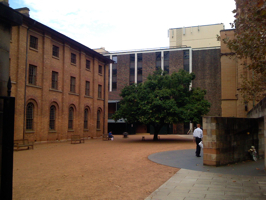
The building in the left foreground of the image is the historic Hyde Park Barracks Museum in Sydney. The building at the back behind the tree is an extension to the equally historic NSW Lands Department building (right of shot). Apparently there was great care taken and no expense spared to ensure that the brickwork of the extension was an exact match for the brickwork on the Hyde Park Barracks building. "Not very successful" I hear you cry! The story goes that after the extension was completed some bright spark decided to steam clean the brickwork on Hyde Park Barracks, revealing the true colour of the brickwork and leaving the unsightly mismatch shown in the photo.
Permalink | Comments (0) | TrackBack
I know what you are thinking stories
Filed in Business storytelling.
Many business audiences like to hear stories that are directly relevant. So if you are a civil engineer, for example, it's likely you're not that interested in stories about electrical engineers. But sometimes (actually quite often in the case of innovation) there are great lessons to be learned from another discipline. In these cases it might find be useful to tell a “I know what you are thinking" story to prepare the audience to hear what you have to say.
For example, with our engineers you might like to tell them a story of how a concrete swimming pool was incorrectly installed putting the installers in harm’s way. These engineers are unlikely to see the relevance of a swimming pool story in the first instance so get them ready to hear it by telling a “I know what you are thinking" story. The first step is to find an instance where one discipline was inspired by the practices of another (check out the Medici Effect for examples). It might be something like a group of engineers who heard about the practices of a plastic surgeon and at first you couldn’t imagine there was any relevance, but the surgeon story gave them the idea that totally revolutionised a key aspect of their work. Once this story is told you can start on the story you wanted to tell at the outset, which might on the surface seemed irrelevant to the audience.
The idea of a "I know what you are thinking" story is from Annette Simmons' new book, Whoever Tells The Best Story Wins. Annette describes six storytelling patterns.
Thanks to Seb Fajzullin for asking me the question on how you might tackle this situation with stories.
Permalink | Comments (0) | TrackBack
What do you notice about these recent books on collaboration?
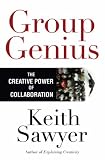
They are all written by single authors. Is it too difficult to write a book collaboratively?
By the way, the first and third books are excellent. Evan Rosen promises to talk about culture but spend most of his time talking about technology.
Permalink | Comments (5) | TrackBack
Women's memories are more speech-filled than men's
Filed in Business storytelling.
Contrary to popular belief, new research is showing that woman don't talk more than men (see here and here). They do, however, recall more of what was said than blokes when asked to recount their experiences. We must have plenty of examples or these verbatim recollections in the stories we've collected over the years.
Richard Ely and Elizabeth Ryan have just published their findings and have also surmised,
" ... women may recall more speech than men because of differences in the way boys and girls are spoken to by their parents. "Parents are more elaborative and more emotional when conversing with daughters than with sons."
Christian Jarrett reports this news at the Research Digest blog and also notes that the researchers also discovered that emotional events were more likely to be remembered with what was actually said.
Take this example, in which a participant recounted the time he accidentally injured a team-mate in baseball, and went to see if he was okay: "The coach just turns to me and says 'Get out of here you little bastard, you have done enough.' I didn't play baseball for five years after that."
This reminds me of the story Miriam Margolyes tells on Andrew Denton's show when the Queen tells her to "be quiet." It's a terrific story told by a consummate storyteller.
Ely, R., Ryan, E. (2008). Remembering talk: Individual and gender differences in reported speech. Memory, 16(4), 395-409. DOI: 10.1080/09658210801949869
Permalink | Comments (0) | TrackBack
Expertise: talk the talk vs walk the talk
Filed in Expertise location.
Social scientist, Harry Collins, has spent his career hanging out with gravitational wave physicists and learning to talk like one. Harry's research is on expertise and working out whether someone who can talk like a physicist can be indistinguishable from some who can do physics if you only talk to them.
The key to the whole thing is whether people have had access to the tacit knowledge of an esoteric area—tacit knowledge is know-how that you can't express in words. The standard example is knowing how to ride a bike. My view as a sociologist is that expertise is located in more or less specialized social groups. If you want to know what counts as secure knowledge in a field like gravitational wave detection, you have to become part of the social group. Being immersed in the discourse of the specialists is the only way to keep up with what is at the cutting edge.
Harry did a simple test to work out whether we can sound just like an expert.
The original version we did was with color-blind people. What we were attempting to demonstrate is something we call the strong interactional hypothesis: If you have deeply immersed yourself in the talk of an esoteric group—but not immersed yourself in any way in the practices of that group—you will be indistinguishable from somebody who has immersed themself [sic] in both the talk and the practice, in a test which just involves talk.
If that's the case, then you're going to speak as fluently as someone who has been engaged in the practices. And if you can speak as fluently, then you're indistinguishable from an expert. It's what I like to call "walking the talk" [I think he means talk the walk because in my book walking the talk means you can do what you say]. You still can't do the stuff, but you can make judgments, inferences and so on, which are on a par. We picked color-blind people because they've spent their whole lives immersed in a community talking about color. So we thought color-blind people should be indistinguishable from color-perceivers when asked questions by a color-perceiver who knew what was going on. And we demonstrated that that was in fact the case.
I guess this means that the only way to determine someone has real expertise is to see them in action. This simple point is particularly important in light of the problems Australia is facing when some overseas doctors are gaining their Australian credentials and then patients discover their incompetence [the latest example from Melbourne]. But this approach is not going to be easy for every type of job. Think about those jobs that involve the application of subtle judgement where the outcome remains unknown for years (and tracing the outcome to the decision is impossible)—I'm thinking of policy makers, engineers, leaders. In these cases we have to rely on stories of experience told by people we trust.
Interview from Scientific American
via Mind Hacks
Permalink | Comments (2) | TrackBack
New Whitepaper: Three journeys—A narrative approach to successful organisational change
Filed in Changing behaviour.
David Drake (renowned narrative coach) and I have written this white paper to pull together our thinking on how to use our three journeys approach to organisational change and also add a coaching perspective. I hope you find it useful and of course feedback is welcome. Here's a little blurb.
This paper describes the approach we take with clients to successfully foster change in their organisations. It is based on our deep knowledge of both complexity and narratives, and it reflects our holistic approach in working at both systemic and personal levels to help organisations and their people move forward. Coaching is integral to our process at each step of the way and to our clients’ success in reaching their change and improvement goals. Our approach helps leaders and organisations embrace the need for change, approach it openly, prepare for it fully, and achieve the critical outcomes—whether it be a new technology, a turnaround, a new strategy or some other cause.
Permalink | Comments (0) | TrackBack
Finding customer stories
Filed in Anecdotes.
Every organization has a set of values, most even live by them, but how many have successfully embedded the right behaviours that reflect those values every day?
This weekend I read an interesting anecdote in What the customer wants you to know that led me to think about this.
A senior manager of a financial services organization shares his experience with the author.
“I went around and I asked everybody I saw what were their great achievements in the last year. And not one person’s answer included the word ‘customer,’” he says. “There was stuff about ‘I integrated twelve products into one’ or ‘we migrated this to that’ or ‘we had four products’ and ‘we hit this target or that target.’ But not one person mentioned the customer.”
A business where stories about customer satisfaction or success don’t emerge naturally could indicate potential trouble. This anecdote is a good reminder and example of how stories can be used to assess behaviours at work.
Encouraging stories to emerge constantly and looking out for patterns in these stories could help managers to detect both changing customer needs and the ability of staff to respond to the customer.
When was the last time you heard or told a great customer story?
Permalink | Comments (0) | TrackBack
Criteria for implementing initiatives in a complex space
Filed in .
Dave's written a excellent post on how to make progress in a complex environment. It's excellent because it comes at a time when I'm working with a client where their staff have come up with a range of initiatives yet there is a feeling among some of the project members that the initiatives wont make a difference—they are not clear winners.
In hindsight, I should have made my approach clearer to my client and said that we create a process for the client to work things out for themselves and that I don't have the answers. I suspect they're used to the highly controlled and 'expert' facilitator who leads the group to a conclusion that is mostly pre-determined. But I didn't do that. I used a combination of narrative techniques, open space and world cafe approaches so the business folk worked out their own way forward.
Mind you there's a spectrum here. I have insights to share. I've seen many other organisations and their initiatives but I know the context will be different and a tremendous success in one organisation might go nowhere in another. But they are still possible patterns for experimentation. I need to work on other ways to share these ideas and experiences.
I liked Dave's tests for whether an initiative should be tried. To paraphrase:
- If the proposed initiative fits in with things that have happened before and what might happen in the future, give it a go
- If a failure in unlikely to be overly costly and there are things to learn, give it go
I'd like to add another criteria,
- If people in the organisation are taking responsibility for making it happen, give it go
Failure is scary for organisations. But without a safe-fail culture new ideas and new opportunities will never stick.
Permalink | Comments (0) | TrackBack
Lessons from Lewis & Clark—a new white paper is coming
Filed in Changing behaviour.
David Drake and I have written a new white paper describing a narrative approach to successful organisational change. We've built on our three journeys metaphor, which you might remember was inspired by the epic exploration of the the US West by Meriwether Lewis and William Clark. Apart from describing the three journeys we've drawn a set of lessons from the Corps of Discovery (the nickname for the expedition) for each of our three journeys. Here are the lessons from our first journey:
- It is important to be clear on sharing the rewards before there are any.
- Travelling requires both authority and freedom/permission.
- Change requires an organisation to venture into unknown territory; it is as much about discovery as it is about design.
- Every change process has its “St. Louis”—a jumping off point into the unknown, a hub for action, and a platform to which one can return.
- Often the landscape changes merely as a result of setting out on the journey.
If you'd like to early notification and the ability to get this paper before we publish it more widely, please sign up for our monthly newsletter. In the next few days I will share the lessons for the second and third journey.
Permalink | Comments (0) | TrackBack
Rating your own expertise
Filed in Expertise location.
Last week I was running an open space to kick off a new community of practice for engineers. While I was wandering around the room I overheard one of the participants make this point about self rating your expertise.
The guy who has done this job for 20 years rates himself as good. But the guy doing it for two years rates themselves as expert. They don't know what they don't know.
Permalink | Comments (9) | TrackBack
The one-arm boy
There was a boy who was born without a right arm. On his ninth birthday he asked his parents if he could join a karate club. They were delighted by the idea and the boy quickly became a regular at the local dojo. The boy wanted to compete in a tournament and asked his master if this was possible. The master said he could but only if he listened carefully to his master and trusted him.
The master taught the boy one move and one move only. The boy practised it diligently but after a while he was worried that the other boys were learning a range of moves and he only had one. He asked the master to teach him other moves but the master said no. The master just urged the boy to keep practising that one move.
The boy won the first round of the tournament and then the next round and the one after that until he found himself winning the entire tournament. The boy was baffled. How did he do it? He asked the master how a boy with only one arm and only one move could win a karate tournament against these other boys. The master smiled and told the boy that there is only one defence against the move the boy learned and that defence involves grabbing the attacker by the right arm.
I believe this is a Zen teaching story. It was told to me by Pavan Choudary. I spent two days with Pavan and a terrific group of creative people at Conversations that Create. Pavan has recently launched his book, When you are sinking, become a submarine. Pavan is an inspirational and fascinating fellow and if his book is anything like the wonderful conversations we had, it will be well worth getting a copy.
Permalink | Comments (0) | TrackBack
The difference between knowledge and information
"Not that old chestnut" I hear you cry.
We have written a whitepaper on this subject and blogged on it a few times. It keeps the KM list serves across the planet pre-occupied for a few months each year.
I recently had coffee with a client to get an update on the implementation of the knowledge strategy we did for them a while back. The client described good progress in many areas but highlighted one of the things holding them back was the continuing confusion/uncertainty about the difference between information management and knowledge management. This was despite an extensive education campaign to get a consistent 'language' in place across the organisation on order to minimise the roadblocks to implementation.
This reinforced to me that we should just stop 'pushing the proverbial up a hill' on this one. My suggestion to the client was to stop talking about knowledge management. It is much easier to grasp concepts like 'better information management' on the one hand, and 'improved collaboration and learning' on the other. This conception makes it much clearer that there is a big 'people' and 'process/practice' component to the task.
Knowledge strategy = Information Management + [Collaboration and Learning]
Permalink | Comments (2) | TrackBack
Best website for learning
Filed in .
We were advised this morning that LearnX Asia Pacific 2008 has announced that the winner in the category of 'Best Website for Learning' is ........Anecdote! We are really pleased that our efforts to make the website an interesting and valuable place have been recognised in this way.
Shawn and Robyn are presenting at the LearnX conference on 12-13 June on our work in using narrative-based approaches to improve induction and retention for indigenous staff. Should be fun.
Permalink | Comments (2) | TrackBack
Melbourne taxis and Sydney taxis
Filed in Anecdotes.
Last week Melbourne was witness to our taxi drivers protesting in the city streets against their poor working conditions. The protest was sparked by the fatal stabbing of a fellow taxi driver. Among a range of improvements, the drivers wanted taxi owners to make available security screens that wrap around their driver's seat.
This week I was in Sydney and Daryl reminded me that taxis there were once big users of driver security screens but they're rarely seen these days. We have also noticed a marked improvement in the quality of Sydney taxis over the last couple of years. So when we jumped into a cab we asked the driver why the screens had disappeared.
The driver knew exactly what had changed. "A couple of years ago some new legislation was brought in that enabled taxi drivers to refuse a fare," he said. "Now we choose who gets into our cab and as a result violence has dropped. We also know if a single, male passenger, wearing a cap (to shield his face from the in-car security camera) jumps into the back seat, it's likely to be trouble, and we tell them to get out."
According to this cabbie, this one intervention has made the big impact on driver security.
I wonder why Melbourne is not learning the lessons from Sydney?
Permalink | Comments (3) | TrackBack
Global Storytelling - Pangea Day
Filed in .
May 10 is Pangea Day. A great opportunity to get inspired!
Storytellers from all over the world will tell their stories about humanity to humanity. 24 short films have been selected (from the thousands submitted) based on their ability to inspire, transform, and help us see the world through another person's eyes. Check out this video about the event.
Tune in...
Date: May 10, 2008
Time: 18:00 to 22:00 GMT
Language: Full program subtitled in Arabic, English, French,
German, Hindi, Portuguese, and Spanish.
How to watch: In person, online, on TV, on your mobile phone
Permalink | Comments (0) | TrackBack
Conversations take time
Filed in Collaboration.
A few weeks ago, about the time of the 2020 Summit, I met with Dave Pollard at the Athenaeum Library on Collins Street. Dave was visiting from Canada. I've been a long-time reader of his blog and was excited by the prospect of finally meeting him face to face. As serendipity would have it Michael Sampson (Sharepoint collaboration guru) was also in town (from New Zealand) and joined us.
When you meet a person for the first time and you know there is plenty of things to talk about, the standard one hour meeting makes no sense yet I'm surprised how few people make time for longer conversations. Dave, Michael and I talked for 3-4 hours and it was only in the last couple of hours we got into the juicy topics. Yeh, yeh, I hear everyone saying, "We're soooo busy," but you know what, you need to make time for great conversations. The time excuse is our defence mechanism so we can say no to requests. How many times have you seen people greet each other with the words, "how're going? Real busy! Me too. Do you want to get a coffee? Sure?"
Well, I see something we talked about inspired a new post from Dave on his vision for how we might work in 2020. I'm glad to see it is filled with stories and concepts of collaboration.
Permalink | Comments (3) | TrackBack
Storytelling event in Washington
Filed in Business storytelling.
My friend Madelyn Blair is busily preparing for two great storytelling events in Washington that start on the 9 May. I believe there are 30 seats left now so you still register to attend
For Goldenfleece Day08 go to http://www.goldenfleececon.orgFor Smithsonian Event, May 9 go to http://residentassociates.org/ticketing/tickets/reserve.aspx?performanceNumber=87387
I wish I could make it because I know there will be terrific conversations about storytelling in business context and I would get to meet many of the people I Skype such as Victoria Ward, Madelyn, and Steve Denning.
Permalink | Comments (0) | TrackBack
Cooperation and the tragedy of the commons
Filed in Collaboration.
One of our regular commenters, ken, has directed me to an interesting article in the Washington Post equating Barack Obama and Hilary Clinton's race for the Democratic nomination to the classic tragedy of the commons scenario. That's when the individual actors operate to maximise their self interest and in the process ruin things for the wider group.
Here's how the tragedy of the commons (TOTC) scenario played out for a group of people playing the role of timber companies.
He asked volunteers to play the role of timber companies in a forest. The volunteers were told they could harvest a certain number of acres each year, and were also told how quickly the forest could replenish itself. The question was whether volunteers -- thinking on their own and without discussions with other volunteers -- would restrict themselves to taking less than half the timber that they were allowed. If everyone did this, the forest would replenish itself in perpetuity, creating the greatest wealth in the long term.
But because the volunteers did not know whether their kindness would be reciprocated by others or exploited by competitors, people raced to cut as much timber as they could and quickly razed the forests to the ground. Groups with volunteers more willing to think about the collective good preserved their forests longer. But selfish people within these groups had a field day exploiting the altruists -- and the forests perished anyway.
Unfortunately TOTCs are played out in organisations everyday, especially by managers who haven't worked out that their role is to help their staff succeed. And this problem is being exacerbated by the trend of people moving from one job to another and only sticking around for the short term. This is a problem because TOTCs are only avoided if people are working for the longer term.
the only way to prevent tragedies of the commons is to set up structures in advance that reward long-term thinking and punish short-term selfishness. This happens mostly among competitors who share long-term interests and have social relationships of trust (emphasis added): If you and I are Maine lobstermen, we are likely to agree to set up limits on the overall catch each year because we see our future, and our children's future, inextricably linked. In the absence of trust and long-term relationships, the only way to prevent these tragedies is to have an outside regulatory agency step in to establish -- and enforce -- limits.
Permalink | Comments (1) | TrackBack