« November 2006 | Main | January 2007 »

Reflecting on Knowledge Strategy

Posted by Mark Schenk - 31/12/06
Filed in Knowledge.

Anecdote has worked with some fantastic organisations over the past year and one of the main areas has been in developing knowledge strategies. I thought it timely to look back and reflect on some of the key learnings from these projects and some of these initial thoughts are captured in the bullet points below.

  • Strategy is a journey much more than it is a deliverable. Delivering a ‘strategy’ to a leadership team without engaging them in its development is a recipe for disaster at worst or inaction at best. This was driven home to me years ago when in a senior management role: the ‘strategy manager’ stood up at an offsite meeting and delivered the new strategy and concluded ‘well if there are no comments then we will considered the strategy adopted’. He was the only one in the room who understood it well enough to make any comment. The rest of us just thought…’whatever!’, and proceeded to ignore it.

  • The flip side to this is the difficulty encountered when trying to write the strategy ‘artefact’ through the normal ‘staffing’ process within organisations. Everyone has a different view of what it should contain, how it should be presented, how long it should be, what font should be used  etc etc. Nightmare. Avoid if possible. Patrick Lambe suggests a better way is for the project to culminate in a strategy workshop engaging the leadership team and the artefact becomes a summary of the workshop output.  
  • The knowledge strategy projects with the biggest impact have used highly participative approaches including anecdote circles and group sensemaking. The impact is mainly through the organisation changing as the project progressed and by people seeing and feeling these changes. I remember an anecdote circle from a heavily stovepiped organisation (see below) that exposed fundamental assumptions embedded in the organisations behaviour, that were patently ridiculous once aired. It is nothing short of amazing to see behaviours change once fundamental assumptions and values are surfaced.

We have developed cheat sheets on each country we deal with.  These contain contact information for the major agencies within that country.  We keep them on our local drives as they are specific to our area and are of no use to anyone else.”  Another participant, from a different area in the same division, then interjected: “We deal with other countries and I didn’t know about the initiatives going on in other areas.  We have been working on our own cheat sheets. It could have saved us a lot of work to use yours.”

  • Don’t overcomplicate things. Work hard to establish a simple, shared understanding of what the knowledge stategy is about. Avoid complex definitions. If you must have a definition of KM then use one like Carla O’Dell’s simple description “Knowledge management is the systematic process of connecting people to people and people to knowledge and information they need to act effectively and create new knowledge.” [1]
  • To harp on a theme of ours, little things can make a big difference. Some initiatives are hard to get up because they are so obvious, simple and seemingly innocuous. But, as Drucker said “the greatest compliment you can pay an innovation is to say ‘that’s obvious’”. Resist the temptation to put little things aside in favour of major initiatives.
  • Develop a set of principles or behavious that resonate within the organisation. I will blog an example set in a few days time.
  • Many of the challenges are similar across organisations. But the path to tackle them needs to be crafted to match the specific context of the organisation. Common themes are lots of silos creating barriers to the flow of knowledge; everyone being too busy to reflect, learn and strategise; low approachability and accessability of senior staff; staff that do not feel empowered to decide and act; and IT philosophies based on delivering systems to users and then trying to overcome their passive-aggressive resistance rather than focussing on user requirements and useability from the outset.

We have found that the key roles of the consultant are to bring proven approaches to the strategy development process, to provide a sense of what is possible (including communicating this in ways that resonate within the organisation) and to achieve acceptance of initiatives that occasionally stretch the comfort zone of the organisation. The more we help organisations in this area the more we realise the impact that having a robust knowledge strategy can have on organisational performance and the achievement of business outcomes.

[1] C. O'Dell, The Executive's Role in Knowledge Management. Houston: APQC Publications, 2004

Send this entry to:  Share on Twitter Share on Facebook    Clip to Evernote   | Email to a friend

Permalink | Comments (6) | TrackBack


Why people do the things they do

Posted by Shawn Callahan - 27/12/06
Filed in Strategic clarity.

Christmas reading has help me stumble across two very different essays with the same theme: people are enormously influenced by their social ties. Anyone reading this blog won’t be surprised by that theme but these essays present two very different contexts. The first is called Knowing the Enemy by George Packer, which was recently published in the New Yorker. It’s a lengthy treatment on how social scientists are re-conceiving the way the US government might approach insurgencies. The “War on Terror” moniker has mislead policy makers and commanders in thinking primarily from an armaments and military force perspective. The essay suggests that in order to combat insurgencies we need information, influence and the ability to connect people in different ways.

The other essay is called Darwin on the Bounty: The How and the Why of the Greatest Mutiny in History by Michael Shermer. It’s a chapter in his book, Science Friction: Where the Known Meets the Unknown. He argues that Christian Fletcher did not lead the mutiny merely to rebel against the poor treatment meted out by Captain Bligh. Rather, he was keen to return to Tahiti and the life and family he established there. Shermer’s underlying theme is an evolutionary one emphasising the deep motivation of people wishing to maintain their close social ties. In the prehistoric past hanging with the ones you love was an excellent strategy for perpetuating one’s gene pool—they tended to be your relatives. More recently these small family groups have become more complex and now include other affinities yet the evolutionary habit remains and stays with us as a strong motivating force.

What does this mean for organisations? Well I think one of the social scientists from Knowing the Enemy, Australian Lt. Col. David Kilcullen, said it best in his tips for company commanders (read, managers) about to be deployed in Iraq and Afghanistan:

Know your turf—Know the people, the topography, economy, history, religion and culture. Know every village, road, field, population group, tribal leader, and ancient grievance. Your task is to become the world expert on your district.

[thanks to Les Posen for the link to Knowing the Enemy]

Send this entry to:  Share on Twitter Share on Facebook    Clip to Evernote   | Email to a friend

Permalink | Comments (4) | TrackBack


Blog-tag: a virtual cocktail party

Posted by Shawn Callahan - 21/12/06
Filed in Fun.

Luis Suarez over at ELSUA has just tagged me in a virtual cocktail party. What does that mean? I gather that when you’re tagged you tell five things people might not know about you, then tag five more bloggers. So here are five things people might not know about me.

  • My original degree was in geography and archaeology and my honours thesis was titled “Mid-channel shoals in a macro-tidal environment—Ord River, Western Australia”.
  • My first business was called Callahan, Fox & Associates and we wrote guidebooks for national parks, ran a photographic library and did geographic information systems (GIS) consulting for the Defence department. We went broke.
  • I love reading biographies of scientists, artists and explorers.
  • My first knowledge management project (1996) involved helping the Australian Geological Survey Organisation catalogue their scientific datasets and discovered that the greatest challenge was to get the scientists interested in the task. We wrote a paper about our experience.
  • I’m both a US and Australian citizen. I was born in Beaufort, South Carolina. I’ve lost the southern accent.

So here are the people I would love to know more about:

Nancy White, Kathy Sierra, Bob Sutton, David Maister, Leon Gettler

Send this entry to:  Share on Twitter Share on Facebook    Clip to Evernote   | Email to a friend

Permalink | Comments (0) | TrackBack


Foster your communities of practice by getting members to answer questions

Posted by Shawn Callahan - 21/12/06
Filed in Communities of practice.

Kathy Sierra had made an astute observation about user communities: they thrive if more people, from novice to expert, ask and answer questions. In fact, Kathy focuses on how to get more people answering questions and in particular how to get the intermediate-level users involved in answer giving. The strategy is a smart one. If more people are answering questions they become more involved in the community’s activities, they learn more (a great way to learn is to teach), they stay involved and add value to the community.

But there is another reason to get your intermediate-level members answering novice questions: experts are not great at conveying what they know because their years of practice have enabled them to abstract and internalise how they get things done and explaining it to a novice is difficult for them. It is better for a novice to learn from an intermediate-level practitioner than from an expert (check out Ackerman et. al. 2003 or Ericsson et. al. 2006)

But here is the challenge:

Encouraging a “There Are No Dumb Questions” culture is only part of the solution. What we really need is a “There are No Dumb Answers” policy.

Kathy suggests six steps to create a “There are No Dumb Answers” culture:

  1. Encourage newer users—especially those who've been active askers—to start trying to answer questions
  2. Give tips on how to answer questions (see below)
  3. Tell them it’s OK to guess a little, as long as they ADMIT they’re guessing
  4. Adopt a near-zero-tolerance “Be Nice” policy when people answer questions
  5. Teach and encourage the more advanced users (including moderators) how to correct a wrong answer while maintaining the original answerer’s dignity.
  6. Re-examine your reward/levels strategy for your community

Here are a couple of FAQs from javaranch that give suggestions on how to ask and answer questions (java developers have a tradition of running phrases together with each word captilised—just in case you were wondering):

http://faq.javaranch.com/view?HowToAskQuestionsOnJavaRanch

  • ShowSomeEffort
  • SearchFirst
  • CarefullyChooseOneForum
  • EaseUp
  • PatienceIsAVirtue
  • UseAMeaningfulSubjectLine
  • DoYourOwnHomework
  • TellTheDetails
  • AvoidRedHerrings
  • IsolateTheProblem
  • PostRealCode
  • UseOneThreadPerQuestion
  • UseRealWords
  • KeepItDown
  • UseCodeTags
  • UseTheForumNotEmail
  • RespectYourCoranchersPrivacy
  • HowToCopyEnvironmentVariablesAndDirectoryStructures
  • SayThanks

http://faq.javaranch.com/view?HowToAnswerQuestionsOnJavaRanch

  • FirstRuleDoNoHarm
  • BeNice
  • BePatient
  • ReadTheQuestion
  • ReadTheAnswers
  • AdmitWhenYouAreGuessing
  • DontWakeTheZombies
  • DejaVuAllOverAgain
  • LetThemDoTheirOwnHomework

Ericsson, K. A., N. Charness, et al., Eds. (2006). The Cambridge Handbook of Expertise and Expert Performance. Cambridge, Cambridge University Press.

Ackerman, M., P. Volkmar, et al., Eds. (2003). Sharing Expertise: Beyong Knowledge Management. Cambridge, Massachuetts, The MIT Press.

Send this entry to:  Share on Twitter Share on Facebook    Clip to Evernote   | Email to a friend

Permalink | Comments (1) | TrackBack


Narrative for Business Workshop in the USA

Posted by Shawn Callahan - 19/12/06
Filed in .

Shawn-photo-cc-bw150Hi there. We’re planning to run our successful Narrative Techniques for Business in the USA in early 2007. We’re at the “choose the city and date” stage and are hoping you might let us know if you are interested in attending this one-day workshop. If so, what city in the USA are you based in? Just follow this link to send your feedback. We appreciate your help and look forward to meeting you in 2007.

Send this entry to:  Share on Twitter Share on Facebook    Clip to Evernote   | Email to a friend

Permalink | Comments (3) | TrackBack


How people perceive one another - a short film

Posted by Shawn Callahan - 19/12/06
Filed in Business storytelling, Fun.

I was at the Salesforce.com Christmas drinks a couple of weeks ago and as part of the entertainment we watched a few short films. All the films are available at www.niceshorts.com.au but there was one in particular I thought you might like because it illustrates how we build stories to understand people and how often we are wrong in our first assessment. The short film is called Cross Examination.

Send this entry to:  Share on Twitter Share on Facebook    Clip to Evernote   | Email to a friend

Permalink | Comments (1) | TrackBack


Questions to elicit stories

Posted by Shawn Callahan - 19/12/06
Filed in Questions.

The Swiss Agency for Development and Cooperation has produced an excellent little book called the Story Guide: Building Bridges Using Narrative Techniques. It’s filled with a range of techniques for collecting and using stories in an organisational setting. I’m a bit of a collector of questions so I was delighted to see their list of questions for finding stories.

“Tell me about a time when …” Tell me about a moment when …”

  • you or your project faced a dilemma in a project
  • you or your team experienced a significant turning point
  • you dealt with a real crisis on a project. What happened before, during and after it?
  • you felt really proud to be part of something
  • you took a real risk and it paid off or didn’t pay off
  • you were really inspired by what was going on around you
  • you encountered an obstacle and overcome it
  • you saw (one of your organisation’s values) really brought to life/being acted out
  • your partnerships were working really well
  • you saw positive changes happen as a result of your work

Colton, S., S. Ward, et al. (2006). Story Guide: Building Bridges Using Narrative Techniques, Swiss Agency for Development and Cooperation.

Send this entry to:  Share on Twitter Share on Facebook    Clip to Evernote   | Email to a friend

Permalink | Comments (7) | TrackBack


How can you become a better facilitator?
Posted by - 16/12/06
Filed in .

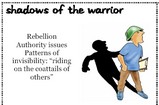
Shadow of WarriorAlmost a month ago after identifying some metaphors which described various styles of facilitation (eg. Conductor, Chameleon, Dictator) I asked What kind of facilitator are you? Following on from this, Simon Kneebone and I delivered a session at the Australian Facilitators Conference in Geelong exploring facilitator archetypes through story. We’ll be publishing more around this in time to come, but for now, I’d like to invite you to take our survey around exploring your shadows in facilitation. Gestalt theory has what's called the paradoxical theory of change. It suggests that one doesn't change by trying to be what one is not, rather, change occurs by us being who we already are. When it comes to considering the shadow elements of ourselves, we already start to change by becoming familiar with these elements of ourselves which we may for so long a time ignored, neglected or repressed. Click here to take the survey.

Send this entry to:  Share on Twitter Share on Facebook    Clip to Evernote   | Email to a friend

Permalink | Comments (1) | TrackBack


The PreMortem - anticipating a plan's weaknesses

Posted by Shawn Callahan - 10/12/06
Filed in Knowledge.

One of the techniques I’ve recently introduced to my lessons-learning projects is what Gary Klein calls a PreMortem. As we all know, a PostMortem helps us learn why a patient has died. A PreMortem explores why a project might die in the future. Here’s how Gary describes the approach. I find it works well at the end of an open space after the planning process is complete. It injects an additional level of realism into the plans.


Step 1: Preparation. Team members take out sheets of paper and get relaxed in their chairs. They should already be familiar with the plan, or else have the plan described to them so they can understand what is supposed to be happening.

Step 2: Imagine a fiasco. When I conduct the PreMortem, I say I am looking into a crystal ball and, oh no, I am seeing that the project has failed. It isn’t a simple failure either. It is a total, embarrassing, devastating failure. The people on the team are no longer talking to each other. Our company is not talking to the sponsors. Things have gone as wrong as they could. However, we could only afford an inexpensive model of the crystal ball so we cannot make out the reason for the failure. Then I ask, “What could have caused this?”

Step 3: Generate reasons for failure. The people on the team spend the next three minuted writing down all the reasons why they believe the failure occurred. Here is where intuitions of the team members come into play. Each person has a different set of experiences, a different set of scars, and a different mental model to bring to this task. You want to see what the collective knowledge in the room can produce.

Step 4: Consolidate the lists. When each member of the group is done writing, the facilitator goes around the room, asking each person to state one item from his or her list. Each item is recorded in a whiteboard. This process continues until every member of the group has revealed every item on their list. By the end of this step, you should have a comprehensive list of the group’s concerns with the plan as hand.

Step 5: Revisit the plan. The team can address the two or three items of greatest concern, and then schedule another meeting to discuss ideas for avoiding or minimising other problems.

Step 6: Periodically review the list. Some project leaders take out the list every the list every three to four months to keep the spectre of failure fresh, and re-sensitise the team to the problems that may be emerging. (pp 89–90)

Klein, G. (2003). Intuition at Work: Why Developing Your Gut Instincts Will Make You Better at What You Do. New York, Currency Doubleday.

Send this entry to:  Share on Twitter Share on Facebook    Clip to Evernote   | Email to a friend

Permalink | Comments (7) | TrackBack


The Open Space Fishbowl - A new way to an energised conversation

Posted by - 7/12/06
Filed in .

A few months ago Larry Peterson and I discovered and tested a great way to apply the Principles and Law of Open Space Technology to a “fishbowl” to create a dynamic, energized conversation with a whole room of almost 200 people in a short time frame.

Some of the participants said:

“I really enjoyed the openness of the fishbowl, next time I will be in there swimming.”

“We were pleasantly surprised with the number of participants willing to brave the fishbowl, and even more so with the conversation that followed. This was a format that engaged those within the fishbowl to offer the type of forthright commentary that may not have surfaced in another meeting format”.

Thanks to Larry we have put pen to paper and written about our experience, including the approach we have named the Open Space Fishbowl.

Download a copy of: The Open Space Fishbowl

Send this entry to:  Share on Twitter Share on Facebook    Clip to Evernote   | Email to a friend

Permalink | Comments (2) | TrackBack


Knowledge management fact - collaboration degrades when people are further apart

Posted by Shawn Callahan - 6/12/06
Filed in Knowledge, Quotes.

Mark and I have been helping clients with knowledge strategies lately and as we write them up we would remember  knowledge management ‘facts’ like, “knowledge transfer significantly degrades when people are separated by more that 18 feet.” You know how it is, you remember something like this but where is the original research.

So I went looking and found the following:

“When employees work at locations more than approximately 30 meters apart, they have a much-reduced daily contact and less frequent informal communication. Physical separation from others in daily life drastically reduces the likelihood of voluntary work collaboration.” (Kiesler and Cummings 2004: 59)

The authors quote the following references in relation to these statements about proximity and collaboration.

Allen, T. J. (1977). Managing the Flow of Technology. Cambridge, MIT Press.

Kiesler, S. and J. N. Cummings (2002). What Do We Know about Proximity and Distance in Work Groups? A Legacy of Research. Distributed Work. P. J. Hinds and S. Kiesler. Cambridge, Massachusetts, The MIT Press.

Kraut, R. E., S. R. Fussell, et al. (2002). Understanding effects of proximity on collaboration: Implications for technologies to support remote collaborative work. Distributed Work. P. J. Hinds and S. Kiesler. Cambridge, Massachusetts, The MIT Press.

Kraut, R. E. and L. A. Streeter (1995). "Coordination in software development." Communications of the ACM 38: 69-81.

Are you aware of any other research that support or contradict this idea of “out of sight, out of mind?”

Send this entry to:  Share on Twitter Share on Facebook    Clip to Evernote   | Email to a friend

Permalink | Comments (2) | TrackBack


Action-oriented communities of practice

Posted by Shawn Callahan - 3/12/06
Filed in Communities of practice.

This a re-posting as I have updated the diagram that goes with the post and there seems to be a growing interest in this simple model.

There often comes a point in the life of a community of practice when the group really benefits from creating tangible things designed to improve the members’ practice. This point occurs sometime after the early days of formation after the members have worked out their domain, and they know who’s participating, how people get on with one another, and how members communicate.

Following is a simple approach designed to coordinate action within a CoP. 

There are five parts to this approach:

  • general discussion
  • discussion tables
  • a list of possible projects
  • small groups (ideally 3 people) working on things together
  • database

Actio-oriented-CoP350

The general discussion is anywhere the community talks together as an entire group. This might be at regular face-to-face meetings or online using a discussion forum. It’s important not to overwhelm or bore members with too much information or information that is only relevant to some members. The general discussions, therefore, benefit from some level of facilitation.

discussion table is when community members come together to discuss a topic related to the community’s domain. The community coordinator might organise discussion tables on a regular basis. They can be done face-to-face or be conducted online. There should be no more than 12 people at a discussion table at one time to ensure everyone is present and active. If there are more than 12 people interested in the discussion table topic then run multiple discussion tables. During the conversation a participant notes down the ideas of things the community might do to improve their practice. For example, if you were part of a business narrative community and the topic was ‘running effective anecdote circles’ someone might suggest, “we should develop a anecdote circle facilitator’s kit” or “we should develop a member’s training program”. These ideas would be noted and added to the list of possible projects. A summary of the discussion table conservation is also distributed to the entire community.

The list of possible projects is a simple list of all the suggested projects and activities arising from the discussion tables and other forums. You might put the list online and allow members to vote on each suggested project. Members are invited to take on a project from this list in groups of three and ideally with people you haven’t work with before. This simple rule helps the community create new social networks. These small project teams might use an online collaboration space. Once they’ve completed their project they communicate the results to the entire community and store the outputs where members can access them (database).

The community makes progress by hosting discussion tables and encouraging active and robust conversation that leads people to suggest things that would be good to do as a community. The list of projects grows and some are tackled based on the energy and enthusiasm of members. The process of undertaking these projects in small groups creates new relationships which in turn creates new conversations and new ideas for future discussion tables.

Related posts:

Send this entry to:  Share on Twitter Share on Facebook    Clip to Evernote   | Email to a friend

Permalink | Comments (2) | TrackBack


Get your executives reading over Christmas

Posted by Shawn Callahan - 2/12/06
Filed in .

Some of my best projects started from getting a group of executives to read books like The Tipping Point: How Little Things Can Make a Big Difference or Emergence: The Connected Lives of Ants, Brains, Cities, and Software. So now is the time to suggest a couple of good books to get your executives thinking differently in 2007. Better still, buy a handful of copies and hand them out to the people who you think really need to develop a new perspective.

I recommend these four books because each one challenges traditional business thinking , they’re fun to read and they are the type of book someone might enjoy at the beach.

Malcolm Gladwell’s The Tipping Point. I’m still amazed and how many people haven’t read this book despite it being a mammoth best seller. I’ve seen this book transform a couple of key executives by getting them to ask “who are our connectors?” and “do we need more mavens?” which subsequently sparked a set of new conversations and projects that recognised complexity and interconnectness.

Dava Sobel’s Longitude. Dave Snowden put me on to this modern classic. It tells the story of a clock maker, John Harrison,  from the midlands of England and his efforts to win a coveted prize to accurately determine a ship’s longitude at sea. The conventional wisdom and practice of the time (18th Century) was to take measurements of celestial bodies and make complex calculations—a task impossible to perform on a rocking ship. But at every turn the powerful scientists of his day denigrated and derided the clock maker’s mechanical, and ultimately successful, solution. The question for executives is simply, “Are there places in your organisation where we treat our innovators like Harrison?” 

Johnson’s Emergence is full of counterintuitive ideas explained simply and clearly. Great brain food. The main message from this book is that you don’t have to have control of everything for useful and productive things to emerge. In fact, attempting to keep control will only lead to chaos in complex environments.

Daniel Pink’s A Whole New Mind. This is my current favourite. It’s thesis is simple. An over abundance of choice has lead consumers to value things like beauty, ethics and products that stand for something. Outsourcing to Asia of anything that can be made into a process has forced workers in the 1st world to consider new ways to stay productive. Automation is replacing workers on the factory floor with robots. Pink’s suggestion is that 1st world countries like Australia, US and UK need to rebalance their thinking and introduce more right-brain capabilities. These include capabilities like design, story, symphony, empathy, play and meaning.

Happy reading.

Send this entry to:  Share on Twitter Share on Facebook    Clip to Evernote   | Email to a friend

Permalink | Comments (0) | TrackBack


« November 2006 | Main | January 2007 »