« December 2005 | Main | February 2006 »

All models are wrong...

Posted by Mark Schenk - 31/01/06
Filed in .

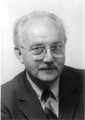
George BoxI am a regular reader of the AOK-Forum list hosted on Yahoo!  A recent post had links to a series of fascinating diagrams.  One of them had a list of features that one should consider in constructing a model and thus help us to make sense of the world.  George Box, the industrial statistician, is credited with the quote ‘all models are wrong, some are useful’.  The characteristics of a good model contained in the link should help us to make our models more useful.

Send this entry to:  Share on Twitter Share on Facebook    Clip to Evernote   | Email to a friend

Permalink | Comments (5) | TrackBack


Open and closed language in facilitation

Posted by - 25/01/06
Filed in .

It was during one of my first strategic planning workshop facilitations when I noticed it. This was in a time before I discovered open space facilitation. The group had just spent the last 20 minutes in discussion and it was time to ask them to feedback on their discussions to the room. Casually, maybe even naively, I said “could you tell me your ideas”. The group looked stunned. I sensed that there was something wrong with this language. It just didn’t feeeel right. Rephrasing I tried again with “I’d like to invite you to share your ideas…”. The group’s composure appeared to change from winter to spring, ideas and discussion flowed forth.

After that experience I started to become more mindful about the words and phrases that are used in facilitation. Speaking to my wife about this, a university trained linguist, I got a confirmation that indeed there might just be something more to this. She too started to noticed how groups seemed to respond to words like ‘conversation’ and ‘discussion’. Maybe also how popular those words can be amongst facilitators. The final nail in the coffin was when I recently spoke with Viv Mcwaters about this phenomena and it resonated. For Viv, it resonated around the areas of tacit and spontaneous knowledge in facilitation. Something I can’t wait to hear more of when Viv eventually comes online with her own blog.

To explore this further, Viv and I are now inviting facilitators to join us together in a reflective practice designed to help you to become more mindful of your facilitation practice as well as providing an opportunity to learn more about the ways and practices of other facilitators. Our focus is on the language facilitators use to encourage or discourage a group discussion. This reflective practice will run over 3 months and for those participating we will provide reminders, feedback and stories from other participants. We aim to share our learnings and findings at a workshop for some upcoming Australasian facilitation conference... If you would like to join in on this reflective practice, send either Viv (viv@thereef.com.au) or myself (andrew@anecdote.com.au)  an email and we will join you in to our program.

Send this entry to:  Share on Twitter Share on Facebook    Clip to Evernote   | Email to a friend

Permalink | Comments (0) | TrackBack


Disappearing Yahoo! groups

Posted by Mark Schenk - 25/01/06
Filed in Communities of practice.

My holiday at the beach last week was interrupted by the news that the actKM Forum discussion group, of which I am currently the Convenor, had disappeared off the Yahoo! Groups site.  As it turns out, on 15 January, a number of Yahoo groups related to Knowledge Management disappeared completely from Yahoo! without notice or known cause.  The groups were actKM, KM-Malaysia and NCSI-KM-Forum (based in India).  To date, Yahoo! has provided neither explanation or assistance regarding the disappearances, and the groups don’t know if the disappearances were the result of administrative activity by Yahoo! or if they were malicious. 

 The most prominent of these groups was actKM.  It has been operating on Yahoo since 1999, it had over 1500 members and many thousands of messages covering every dimension of the knowledge management discipline.  actKM has been studied and written about extensively due to its prominence as a virtual community of practice. 

Since 15 January, all three groups have taken steps to recover the situation and continue their activity.  actKM is migrating to its own discussion list at www.actkm.org and is encouraging all those who were part of the Yahoo group to join the new list.  The new actKM website is based on a blog.

KM-Malaysia has been superseded by the KMAM Yahoo group at http://groups.yahoo.com/group/kmam/.   NCSI-KM-Forum has started a temporary Yahoo group while they determine the best way forward http://finance.groups.yahoo.com/group/IKM-Forum/

One of the positives to come from the disappearance of these groups is the way in which many individuals and KM communities of practice across the globe have rallied to support the affected groups.  I would also call on fellow bloggers to help spread the word so that members of these groups know what’s happening.  It’s also a big wake-up call to those with communities hosted on Yahoo! Groups and the like.

Send this entry to:  Share on Twitter Share on Facebook    Clip to Evernote   | Email to a friend

Permalink | Comments (6) | TrackBack


Using comics to capture and make sense of stories

Posted by Shawn Callahan - 23/01/06
Filed in .

ComiclifeHere at Anecdote we mostly capture stories using anecdote circles recording what’s said on digital audio. But this is not the only way for people to gift their stories. A fun approach, which can be done in small groups, is to get people to remember key events and capture these stories in comic book form.

You can do this all by hand but you might find people are reticent to display their drawing skills. Or you can software like Comic Life (mac only) and preload a set of images of workers with lots of different expressions and use these as your characters.

Comics can also be used to make sense of stories that have already been collected. You might like to represent the archetypes extracted from the narrative and ask the workshop participants to illustrate key values which have emerged. This type of activity helps the participants understand what people mean by the values because they need to converse to create the comic. It also creates a powerful artifact of what was discussed.

Send this entry to:  Share on Twitter Share on Facebook    Clip to Evernote   | Email to a friend

Permalink | Comments (0) | TrackBack


Software that takes you away from your computer

Posted by Shawn Callahan - 21/01/06
Filed in .

The first generation of collaboration tools like Groove, Quickplace, and eRooms where great for sharing documents and having online threaded discussions but had the unintended consequence of tying people to their computer and dissuading them from walking around and chatting face to face to their colleagues.

I was chatting to Andrew a few months back, and I think I made a blog post here as well, that there should be software which encourages people to meet and chat in person. Jack Vinson has just posted a description of Tidebreak’s Teamspot which heads in this direction. The software enables a group of people meeting face to face to integrate and share what’s on their computers whilst talking about it. 

Software like Buzzoodle is closer to what I have in mind. With Buzzoodle you sign up and it makes suggestions (dares?) that you and your team can do together. The idea with Buzzoodle is to create a buzz around an idea or person (word of mouth marketing). I can see how this type of software could be used to create new connections in a social network, build teams and foster innovation. I’m sure it is being done somewhere, so if you know about an example please let us know.

Send this entry to:  Share on Twitter Share on Facebook    Clip to Evernote   | Email to a friend

Permalink | Comments (1) | TrackBack


Data Visualization

Posted by Shawn Callahan - 21/01/06
Filed in Book reviews.

Ever since reading Edward Tufte’s book Envisioning Information way back when I’ve been fInfoage.2sascinated with how to best present complex information. So today I made a great find, a set of  12 charts by Karl Hartig. Each one can be downloaded as a PDF so you can get a really good look at it.

[via Guy Kawasaki]

Send this entry to:  Share on Twitter Share on Facebook    Clip to Evernote   | Email to a friend

Permalink | Comments (0) | TrackBack


Making headway in a new network

Posted by Shawn Callahan - 18/01/06
Filed in .

CafeA first day at a new organisation is often daunting. Apart from just getting up to speed with what you are supposed to be doing you are also trying to find out who you need to know. In a connected world your social network will be one of your most valuable assets.

Much has been learnt about the characteristics of social networks ever since Euler proved it was impossible to cross all seven Konigsberg bridges without crossing the same bridge twice. Here are a few things everyone should know about social networks:

  • connectors exist. Some people have an inordinately large number of social connections while the majority will have very few connections—this is called a scale free network
  • the longer you spend in a network the more chance you have of having more connections—seniority can count
  • you are more likely to make new connections if you already have lots of connections—the rich get richer

These network facts suggest the odds are stacked against a new starter in terms of forming social networks, at least from a perspective of becoming a hub or a connector. But luckily there are others factors at play. Albert-Laszlo Barabasi pinpoints ‘fitness’ as the other key factor affecting a person’s ability to connect. Some people have characteristics which make them natural connectors—great memories for names, likeable personalities, curiosity, humility, openness. In most organisational cultures roles and status have an enormous impact. While other people systematically foster their networks. Keith Ferrazzi’s book, Never Eat Alone, provides such an approach. Each of these examples, however, concentrate on increasing your ‘hubness’. But how else can you increase your impact in a network?

As organisations begin to understand their social networks they are realising the important role boundary spanners play. These people act as a bridge from one part of the organisation to another. Providing a conduit, therefore, for relationships between disparate parts of an organisation is another way to positively effect the network and make a difference in the organisation. It’s at the intersection of disciplines, for example, where creativity often flourishes. In a follow up post I will talk about identifying these network gaps and how you might fill them.

Send this entry to:  Share on Twitter Share on Facebook    Clip to Evernote   | Email to a friend

Permalink | Comments (2) | TrackBack


Visit to Hong Kong and Singapore in February

Posted by Shawn Callahan - 16/01/06
Filed in .

Mark and I are visiting Hong Kong and Singapore next month (20–22nd Feb in Singapore and 23–25 in Hong Kong) and we’re keen to meet with any of our blog readers. It would be great to meet you face to face. Just pop a comment here and we can tick tack on the email.

Send this entry to:  Share on Twitter Share on Facebook    Clip to Evernote   | Email to a friend

Permalink | Comments (0) | TrackBack


Most Significant Change

Posted by Mark Schenk - 14/01/06
Filed in .

Jess dartMost Significant Change is a narrative-based evaluation technique that has been used extensively in program evaluation in social change applications.  Shawn and I had an enjoyable lunch today with Dr Jess Dart one of the originators of the technique and highly respected internationally in its application.  Visit the Clear Horizon website for details about MSC, including the free manual.  If you want to learn about MSC, Clear Horizon is running a two-day training course in Melbourne on 14–15 February – the details are on their website.

Send this entry to:  Share on Twitter Share on Facebook    Clip to Evernote   | Email to a friend

Permalink | Comments (0) | TrackBack


Harnessing complexity takes time and effort

Posted by Shawn Callahan - 13/01/06
Filed in .

Late last year I facilitated an open space event involving knowledge coordinators from a large government agency. These coordinators had never attended an open space event and it was interesting to watch how each person reacted to the format. At about the half way mark I could tell that one person in particular was bothered by the proceedings. “It’s moving too slow. Why can’t we just jump into designing the solution?” she quipped. As a good open space facilitators I kept my mouth shut and only asked a few questions. At the end of the day my agitator approach me and said, “We needed to go through all that discussion and I’m glad we did.”

With this anecdote in mind I was heartened to read this comment by Dave Pollard:

Most participants have been taught to address ‘problems’ in certain traditional ways that are well-suited for simple and complicated problems but often ill-suited to complex situations. We tend to embrace these inappropriate techniques too readily, instead of using the more difficult, unfamiliar and time-consuming processes appropriate to dealing with complex issues, and allowing understanding and resolutions to emerge instead of jumping to quick, comfortable, traditional ‘solutions’.

Tough problems can’t be resolved in one fell swoop. They take time and dedication and a willingness to listen and learn from others. Those people who believe there are quick and efficient solutions to issues such as culture change, leadership, innovation, and any of the other myriad of business issues involving people will be equally deluded in the following 12 month ad-infinitum as nothing improves.

Send this entry to:  Share on Twitter Share on Facebook    Clip to Evernote   | Email to a friend

Permalink | Comments (0) | TrackBack


Google's experimental decision market

Posted by Shawn Callahan - 13/01/06
Filed in .

Last September I reviewed James Surowiecki’s book Wisdom of Crowds. At the end of the review I said:

I can understand why, as Surowiecki laments, few organisations have implemented group decision-making—because it removes power from those who have the authority and responsibility to implement the decisions.

So it was a pleasure to discover, a little belatedly perhaps, that Google is using decision markets to forecast things like “… product launch dates, new office openings, and many other things of strategic importance to Google. So far, more than a thousand Googlers have bid on 146 events in 43 different subject areas.”

As serendipity would have it I read The Google Story over the Christmas break and I can see why their culture supports this type of decision making tool; decision-making appears distributed and employees have opportunities to create new products. Like 3M of the past, Google encourages everyone to take 20% of their work time and pursue a pet project of their choosing.

It appears that the Google decision market is working well. There is a high correlation between the forecast and the eventual outcome. See Bo Cowgill’s chart.

Send this entry to:  Share on Twitter Share on Facebook    Clip to Evernote   | Email to a friend

Permalink | Comments (1) | TrackBack


Narrative reveals values in action

Posted by Mark Schenk - 11/01/06
Filed in .

ValuesDuring the course of 2005 we ran many narrative projects on a range of topics including project evaluation, occupational health and safety, trust, change management and culture change.  In each case one of the valuable outcomes was the exposure of the values in action in the organisation.  In several cases, the values in action were significantly different from the organisation’s espoused values.  In one occupational health and safety project, the values in action identified included:

  • Operations are more important than safety
  • OHS is not valued and is not a priority for managers
  • The organisation only reacts to OHS issues, it does not manage OHS proactively

Obviously these are not the sort of values the organisation espoused and they caused much consternation for the management team.  Thankfully, the next step in the narrative approach, intervention design, provides a great vehicle for identifying the actions that can close the gap between the values in action and the desired ones.  Simple interventions can have disproportionate effect.  For example, one of the interventions in the project mentioned above was the simple step of the CEO having lunch with Chip Goodyear, CEO of BHP Billiton and strong advocate of workplace health and safety and its contribution to the bottom line. The idea of the interventions is not to ‘solve the problem’ but to initiate a portfolio of actions to change the pattern of behaviours around the values.

Narrative is also powerful where organisations wish to develop and articulate a set of values that resonate within the organisation.  As in Shawn’s previous blog on values, illustrating the values with suitable anecdotes provides a way of bringing the values to life.

Send this entry to:  Share on Twitter Share on Facebook    Clip to Evernote   | Email to a friend

Permalink | Comments (1) | TrackBack


Employment Today has published our paper on narrative

Posted by Shawn Callahan - 11/01/06
Filed in .

Employment Today has published our paper called Telling Tales which is a version of Using Stories to Size up a Situation. This paper is primarily about the use of anecdote circles and how they can supplement surveys and interviews. If you want to understand the full process we use to collect, make sense and design interventions based on complexity principles I suggest you take a look at Avoiding change management failure using business narrative.

Send this entry to:  Share on Twitter Share on Facebook    Clip to Evernote   | Email to a friend

Permalink | Comments (0) | TrackBack


What would you recommend to an American on what to read to learn about Australia?

Posted by Shawn Callahan - 11/01/06
Filed in Fun.

I need your help because I’m a little stumped. Michael Wagner in a comment exchange here has asked for some ideas on how to learn about Australia. I’ve pointed him to Peter Garrett’s Australia Day speech where he describes the things you might do with an overseas visitor but I’ve realised I don’t have a good answer and was hoping you might suggest some good books or web sites.

Send this entry to:  Share on Twitter Share on Facebook    Clip to Evernote   | Email to a friend

Permalink | Comments (5) | TrackBack


Collecting stories to build a World Trade Center memorial

Posted by Shawn Callahan - 10/01/06
Filed in Knowledge.

BL Ochman has alerted me to this excellent initiative. The World Trade Center Memorial Foundation is collecting stories about 9/11. I guess we all remember what we were doing when this tragic event unfolded.

The story-base will be significant and I can see how it will be an effective memorial. With such a rich resource it would be a shame to see its potential unfulfilled. Here are a couple of ways it could be enhanced. People should be encouraged to interact with the stories by being able to comment on them and perhaps tagging and rating each story according to its impact on the reader. The group intelligence would arise from these interactions and provide assistance for new users seeking stories that matter to them.

Send this entry to:  Share on Twitter Share on Facebook    Clip to Evernote   | Email to a friend

Permalink | Comments (0) | TrackBack


This is a learning blog

Posted by Shawn Callahan - 9/01/06
Filed in Knowledge.

 Kathy Sierra over at Creating Passionate Users (one of my favourite blogs) has a learning blog:

“A blog that shares what you know, to help others. Even—or especially—if that means giving away your ‘secrets.’”

Here at Anecdote we’ve had a similar approach. I remember a few years ago reading a book called Knowledge Assets by Max Boisot and was taken by his argument that slow industries benefited from locking away knowledge while fast industries benefit from maintaining a cycle of knowledge creation, sharing and adoption. Sharing what you know is the best way to be in a position to create more. Also, what was useful 6 months ago in a fast industry is old hat today. Those squirrelling away their knowledge assets quickly become irrelevant. Check out Boisot’s I-space to understand his point of view more fully.

The rest of Kathy’s post is about what she knows about learning theory. Well worth a look.

Send this entry to:  Share on Twitter Share on Facebook    Clip to Evernote   | Email to a friend

Permalink | Comments (0) | TrackBack


Michael Crichton and complexity science

Posted by Shawn Callahan - 8/01/06
Filed in .

He is much taller than he looksHere is a set of videos of Michael Crichton (author of Jurassic Park and other techo-thrillers) presenting at The Smithsonian Associates and The Washington Center for Complexity & Public Policy. His 60 minute talk (plus Q&A) focuses on the topics of fear, misguided predictions and the impossibility of managing the environment with a mindset of linearity. Using the environment as an example of the ultimate complex system, Crichton exposes the inadequacies of conceiving the environment as a predictable and stable system.

If you are wondering about the relevance of complexity thinking to your organisation, this presentation is a great introduction. Just substitute ‘the environment’ for ‘the name of any large organisation.’

Here are a few quotes which pricked my ears:

“To learn how to manage complex systems takes humility.”

“To manage complex systems takes the ability to admit we are wrong and to change course.”

“If you manage a complex system you are frequently if not always wrong.”

The video is divided into 8 parts. Background material is provided in parts 1–4 and his ideas on complexity start half way through part 4. Parts 7 and 8 are questions and answers. The video is a little wonky in parts but I’m glad the camera operator was able to include the presentation slides where appropriate.

Part 1, Part 2, Part 3, Part 4, Part 5, Part 6, Part 7, Part 8

Thanks to Mary Alice Arthur for pointing me to this presentation.

Send this entry to:  Share on Twitter Share on Facebook    Clip to Evernote   | Email to a friend

Permalink | Comments (0) | TrackBack


Describing your company values

Posted by Shawn Callahan - 8/01/06
Filed in .

In 2004 I helped a large bank conduct a narrative project to examine trust in a call centre. They had just finished working on their corporate vision and values a few months earlier. Their list of values included the usual suspects: integrity, professionalism, respect. What I found interesting was that when we collected the anecdotes there was repeated, explicit and verbatim inclusion of only one of the values in the stories they told about themselves: tell it like it is, no spin.

This colloquially-worded value had established itself as a successful meme and was often extolled during meetings when someone was obviously pussy-footing around a topic—“tell it like it is, no spin” they demanded. I don’t think we heard explicitly about any of their other corporate values.

Tell it like it is, no spin resonated. Everyone knew what it meant. It was in their language—it was how they spoke.

In my experience working in and with large corporations and government agencies, most value statements are impossible to recall and totally forgettable. I think the most forgettable values are those that consist solely of a list of single words. For example, here is a set from one of the government departments in my home town:

  • Leadership
  • Integrity
  • Collaboration
  • Innovation

A single word followed by a description is a minor improvement but based on my experience at the bank I would say phrases, especially memorable ones, make good value statements. GE used phrases. Some are more memorable than others.

  • Have a Passion for Excellence and Hate Bureaucracy
  • Are Open to Ideas from Anywhere... and Committed to Work-Out
  • Live Quality... and Drive Cost and Speed for Competitive Advantage
  • Have the Self-Confidence to Involve Everyone and Behave in a Boundaryless Fashion
  • Create a Clear, Simple, Reality-Based Vision... and Communicate It to All Constituencies
  • Have Enormous Energy and the Ability to Energize Others
  • Stretch... Set Aggressive Goals... Reward Progress... Yet Understand Accountability and Commitment
  • See Change as Opportunity... Not Threat
  • Have Global Brains... and Build Diverse and Global Teams

From this list a couple of phrases stand out for me: ‘have global brains,’ ‘live quality,’ ‘have enormous energy.’ It would be interesting to know which ones resonated most with GE staff.

But I think there is another element which could add significantly: for each value include an anecdote illustrating the value in action.

This illustrative anecdote should be immediately recognisable as something which happens in the organisation. It mustn’t be concocted reflecting an ideal. Rather, it should be collected from people’s experience. There could also be benefit from including an anecdote that’s the antithesis of the value. An antithetical anecdote, however, is much harder to include because the perpetrators could be vilified.

The selection of the illustrative anecdotes could also be a way to include the entire organisation in bringing the values alive and help them learn about and remember the new values. A web-site could be built for people to vote on the anecdotes which they think best illustrates each value. The collective wisdom of the organisation is then brought to bear on the final outcome.

Send this entry to:  Share on Twitter Share on Facebook    Clip to Evernote   | Email to a friend

Permalink | Comments (5) | TrackBack


Margaret Wheatley on Radio National next Tuesday

Posted by Shawn Callahan - 7/01/06
Filed in .

WheatleyRadio National is broadcasting a set of programs called New Dimensions. I caught an excellent discussion about Thomas Jefferson by Thom Hartmann on my way home from Cape Patterson. I noticed that Margaret Wheatley is a guest speaker next Tuesday at midday. Here is the description of the program from the New Dimensions (the company that produces the series) website. After the program is put to air they make it available as an audio file.

Never before in human history, have we been exposed to so much data from so many sources, a veritable deluge, Is it any wonder that people are anxious, cynical, worried, unhappy in their work, and seeking ways to escape? Is there a way out beyond drugs, legal and illegal, or losing ourselves in television, which doesn't tell visions ever? According to Wheatley, "We have to slow down. Nothing will change for the better until we do. We need time to think, to learn, to get to know each other. We are losing these great human capacities in the speed-up of modern life, and it is killing us." For years, Margaret Wheatley has written eloquently about humanizing our organization and helping people work together more effectively and compassionately. In this engaging and provocative dialogue, she shows how organizations can function more like responsive self-organizing, living systems, rather than cold mechanisms of control. Wheatley also expands her ideas into the wider arena of human society.

Send this entry to:  Share on Twitter Share on Facebook    Clip to Evernote   | Email to a friend

Permalink | Comments (7) | TrackBack


Communities of practice - the right brain of the organisation?

Posted by Mark Schenk - 5/01/06
Filed in Communities of practice.

Cool picture of the brainHappy New Year to everyone from the team at Anecdote.  We hope you are returning fresh and fully charged to take on 2006…

I have been thinking about a metaphor that describes communities of practice as ‘the right brain of the organisation’.  As we know, the right and left brains are described as performing different functions.  Neurosurgeon Richard Bergland describes them as follows: “…your left brain is your verbal and rational brain; it thinks serially and reduces its thoughts to numbers, letters and words. …Your right brain is your non-verbal and intuitive brain; it thinks in patterns, or pictures, composed of ‘whole things’ and does not comprehend reductions, either numbers or letters or words.”  The right brain has parallel processing capacity and can detect patterns in large masses of information; it also copes more easily with vague or missing data.  Michael LeBoeuf postulates that creative thinking requires coordinating and using both sides of the brain.

It doesn’t take much imagination to see most organisations as having a predominantly left-brain focus, with hierarchical structures, emphasis on quantitative assessments and decision making based on numbers such as head count and return on investment, libraries full of strategies, doctrine, policy and procedure and formal lines of reporting and communication (to name but a few relevant characteristics).  Computers can also be described as an electronic extension of our left brains.  

Communities of practice traverse most of the formal structures, processes and reporting hierarchies in organisations. They connect people and expertise irrespective of rank, location, specialisation or division.  Perhaps they allow us to access the ‘right-brain capabilities‘ of our organisations.  If this is the case, and if LeBoeuf is right, then communities of practice are not simply desirable in organisations, they are essential…

Send this entry to:  Share on Twitter Share on Facebook    Clip to Evernote   | Email to a friend

Permalink | Comments (2) | TrackBack


New words are new worlds

Posted by Shawn Callahan - 1/01/06
Filed in .

I’ve just arrived home from a week at Jervis Bay—stayed with my folks. My family and I spent lots of time on the beach and reading books. I was kept entertained by Melvyn Bragg’s The Adventure of English which, among other things, got me thinking about how to keep abreast of new developments. Rather than trawling through bit-oceans of online resources perhaps we should just keep an eye on the latest words which make it into our dictionaries. As Bragg points out, new words are new worlds. And these new worlds might help us see new opportunities.

This part of the year is a great time to look for new words, or so I thought. Yes, there are many lists of the top 10 most popular words for 2005. For example Dictionary.com lists the words most searched on for the year which included:

  • love, karma, virtue, cynical, fallacious

But these popularity contests merely reflect the events of the year in some way. Words like tsunami, refugee and pandemic, which made the Merriam-Webster’s Words of the Year 2005, reflect what was in the news last year.

It was more difficult to find where new words are reported. Probably the most accessible source of new words is www.wordspy.com which posts new words as they appear in our news, marketing and literature. While I love this site I suspect there are many faddish and ephemeral words here. At the opposite end of the spectrum is the Oxford English Dictionary. While only available to subscribers I found you could sign up for a week for 8.80 pounds and search for words first cited in specific years.

Well there are no new words first cited between 2000–2005. But here are some words first cited in 1998–99:

  • blog, blogger, blogging, kiteboard, kiteboarder, Ofgem, weblogger, Bluetooth, Furby, spintronic

Sadly each entry is entered years after it is first cited which makes it useless for picking up emerging trends.

Another approach is to use Blogpulse. If you are interested in a term, such as “narrative,” you can track its use across the blogosphere over the last 6 months. Here is the “narrative” trend and for comparison I’ve added “intelligent design,” which is a hot topic on the net at the moment:

Blog_trend

There are probably other good sources for new words. Perhaps one day we will have a tag cloud for the entire blogosphere but would that be useful? Probably not, because it will only highlight the popular, the mainstream. What we are talking about here are ways to detect emerging fields, weak signals and tapping into the long tail. Come to think of it, some interface to wikipedia which illustrates new concepts would be a fabulous tool.


Send this entry to:  Share on Twitter Share on Facebook    Clip to Evernote   | Email to a friend

Permalink | Comments (2) | TrackBack


« December 2005 | Main | February 2006 »