« November 2005 | Main | January 2006 »

Like Andrew I'm taking a couple of weeks off

Posted by Shawn Callahan - 21/12/05
Filed in .

And I just wanted to thank everyone for visiting and reading our blog. It has been great fun and we have learnt a lot. We’ll be back to it in January 2006 refreshed with a host of new ideas to share.

Our good friend Kerenza sent me this link today which represents the world’s news in a single 10 x 10 matrix of photos. Something to keep an eye on during the holidays.

http://www.tenbyten.org/now.html

All the best for the holiday season and I hope you have a excellent 2006.

Send this entry to:  Share on Twitter Share on Facebook    Clip to Evernote   | Email to a friend

Permalink | Comments (1) | TrackBack


Have a merry christmas...

Posted by - 20/12/05
Filed in Quotes.

Finally after some busy months since the anecdote team grew, coupled with some SNA work, it is now time for christmas. I’m sure looking forward to it. My wife and I are jumping in the car and heading to Dubbo (and its zoo), Moree for christmas with my family and then Brisbane for the new year with my wife’s family. I will be back in Melbourne, ready to blog on January 5th 2006.

In the meanwhile, I’ve pulled together a few quotes which I enjoyed, and maybe you might too…

It takes a thousand voices to tell a single story.  
-Native American saying

The universe is made of stories, not atoms.  
-Muriel Rukeyser

If you don't know the trees you may be lost in the forest, but if you don't know the stories you may be lost in life.  
-Siberian Elder

Australian Aborigines say that the big stories-the stories worth telling and retelling, the ones in which you may find the meaning of your life-are forever stalking the right teller, sniffing and tracking like predators hunting their prey in the bush.  
-Robert Moss, Dreamgates

"There have been great societies that did not use the wheel, but there have been no societies that did not tell stories."
-Ursula K. LeGuin

"The tale is often wiser than the teller."
-Susan Fletcher (as Marjan, in Shadow Spinner)

Storytelling reveals meaning without committing the error of defining it.
- Hannah Arendt

It is not the voice that commands the story: it is the ear.
-Italo Calvino  1923-1985, Cuban Writer, Essayist, Journalist

One good anecdote is worth a volume of biography.
-William Ellery Channing  1780-1842, American Unitarian Minister, Author

Send this entry to:  Share on Twitter Share on Facebook    Clip to Evernote   | Email to a friend

Permalink | Comments (1) | TrackBack


Narrative and Change Management Whitepaper now available online

Posted by Shawn Callahan - 19/12/05
Filed in .

I recently announced our new whitepaper entitled Avoiding change management failure using business narrative. I’ve now posted it on our site. Would love to hear your thoughts about it.

Send this entry to:  Share on Twitter Share on Facebook    Clip to Evernote   | Email to a friend

Permalink | Comments (0) | TrackBack


Where's the science? It's just an anecdote...

Posted by - 18/12/05
Filed in Knowledge.

Batman BeginsAnecdotes and anecdotal evidence are considered fairly sceptically by scientists and science as a whole. Science is very much concerned about verifiability and repeatability and although an anecdote is certainly repeatable, verifying an anecdote is a whole other story. Scientists do fear the anecdote, and rightly so. Scientists face a lot of frustration with how the sharing of a mere anecdote is able to convince people against their theories despite the apparent strength of their scientific data. (I would hazard a guess that the Flat Earth Society is an example where at least a few scientists would be tearing their hair out…)

And as Batman’s embracing of the bat, his greatest fear, enabled him access to a deeper power in himself, it looks like scientists are doing the same with the anecdote. The following list compiled by Ron Graham shows where scientists are quite happily using anecdotes and anecdotal evidence:

  • deciding how and to whom to apply for research grants
  • deciding directions for new and unstarted research
  • deciding what questions to ask human subjects in gathering empirical data
  • deciding what and when to publish

Send this entry to:  Share on Twitter Share on Facebook    Clip to Evernote   | Email to a friend

Permalink | Comments (0) | TrackBack


Most social software is anti-social

Posted by Shawn Callahan - 16/12/05
Filed in Knowledge.

I enjoy reading Dave Pollard’s blog. While reading today’s post on the future of blogging it occurred to me that there is an underlying assumption in the way prognosticators like Dave talk about this type of software: people are working alone and social software makes it easy to avoid face to face encounters.

What if we had more software which brought people together, facilitated participation and fostered face to face conversations? Meetup is one example but I’m sure there are others (would love to know what there are) and if there isn’t we should be creating them.

There should be a new category of software called something like ‘participatory software.’ Its role would be to support processes which encourage people to meet, discuss and take action together. I think social software is too focussed on information sharing and the niceties of technology.

Send this entry to:  Share on Twitter Share on Facebook    Clip to Evernote   | Email to a friend

Permalink | Comments (10) | TrackBack


Thinking about facilitation

Posted by - 16/12/05
Filed in .

Catching up with Johnnie Moore for lunch was great. During lunch we got onto the topic of ‘What is facilitation, anyway’. Drawing on the wisdoms (or maybe not) of some previous research in facilitation I boldly suggested 3 pillars to facilitation:

  • Active listening
  • Humour
  • Humility

Course, didn’t take Johnnie a second to bring to the table one element which might trump all of those. Being Flexible. Sure seems to do away with lists, recipes and formulaes… There is only so much one can think about facilitation anyway… You’ve gotta get out there and… Just do it!

Be Flexible


Send this entry to:  Share on Twitter Share on Facebook    Clip to Evernote   | Email to a friend

Permalink | Comments (0) | TrackBack


We are running a narrative techniques workshops in New Zealand

Posted by Shawn Callahan - 15/12/05
Filed in .

On the 15th and 16th of February 2006 we are running our popular Narrative techniques in practice in Auckland and NZWorkshop2006Wellington. Here’s the brochure and registration form. It would be great to see you at the workshop and let me know if you want to meet up while I’m in New Zealand.

Send this entry to:  Share on Twitter Share on Facebook    Clip to Evernote   | Email to a friend

Permalink | Comments (1) | TrackBack


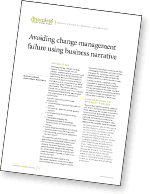
New Anecdote whitepaper: Avoiding change management failure using business narrative
Posted by Shawn Callahan - 13/12/05
Filed in .

I’m pleased to let everyone know Andrew, Mark and I have finished our first whitepaper together and we will be WP5_frontsending it out to everyone who has subscribed to our newsletter list. If you would like a copy now just add yourself as a subscriber. For those of you who can wait, we will be posting it here in a week’s time.

This paper describes how business narrative approaches can dramatically improve your chances of achieving successful change. Avoiding the many pitfalls requires clarity about why things are the way they are, what realistic objectives might be and engaging people in figuring out what to do about achieving them. Paradoxically the key is in not trying to solve the problem.

Send this entry to:  Share on Twitter Share on Facebook    Clip to Evernote   | Email to a friend

Permalink | Comments (0) | TrackBack


Launching an online software solution

Posted by Shawn Callahan - 13/12/05
Filed in .

Logo-squidoo2Software development is one of the toughest pursuits. Especially at that crucial point when you launch and really start interacting with clients. Nancy White has been developing a few lenses over at Squidoo and has posted her recent experience which, unfortunately, was a little dismissive. The good news is that Heath from Squidoo responded quickly (see Nancy’s comments), and even admitted their error.

Admitting errors is difficult. Doing so shows confidence in yourself and your company and builds credibility. It is also good to see Squidoo is monitoring the blogosphere closely.

Anyone in the process of developing online services should take careful note. The hygiene factors include a product which looks great, works well and does what clients (I can’t bring myself to calling people ‘users’) want. Yet hygiene only keeps us from getting sick. The health factors are all about the interactions, the relationships and how people feel after they have interacted. Health promotes growth.

BTW I’ve had a go at creating a lens on business narrative. Still a work in progress. I’m just having a play to see how things work.

Send this entry to:  Share on Twitter Share on Facebook    Clip to Evernote   | Email to a friend

Permalink | Comments (1) | TrackBack


Ever heard about playback theatre?

Posted by - 11/12/05
Filed in Fun.

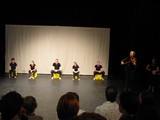
The playback crewStory brought to life

Last night a group of us had a great time going to Melbourne Playback Theatre. Playback theatre belongs to the family of Improv and the way it works is that a director/facilitator stands between the audience and the stage (with the playback crew) and invites stories from the audience. These stories are then brought to life by the playback crew. No rehearsals, nothing, pure improvisation. It was great! Both Shawn and I were able to share a story and have them brought to life. Sure does give a different perspective on your experience…

Send this entry to:  Share on Twitter Share on Facebook    Clip to Evernote   | Email to a friend

Permalink | Comments (0) | TrackBack


More on balancing narrative and data

Posted by - 9/12/05
Filed in .

Nancy White recently made the observation:

I keep thinking about the role of stories. When we say "tell a story" it has a certain tone that doesn't always have credibility in some domains like science. Yet it brings context to content that otherwise is easy to gloss over and dismiss.

This sure is true and like Shawn mentioned in his previous post on balancing narrative and data:

Narrative on its own is entertaining, informative, makes it real and even inspiring but it’s rarely effective on its own to persuade the hard-nosed number-crunchers which dwell in every organisation. Conversely, data is dry, clinical and reasonable but rarely hits you in the guts with excitement to take action.

I like how Nancy's post points to a nice piece of work incorporating both, hard science and narrative: A pediatric digital storytelling system for third year medical students: The Virtual Pediatric Patients.

This reinforces to me, how to be convincing you need: Data, Reasoning AND Story.

Read more on what we have to say about narrative here.

Send this entry to:  Share on Twitter Share on Facebook    Clip to Evernote   | Email to a friend

Permalink | Comments (0) | TrackBack


What is tacit knowledge?

Posted by Shawn Callahan - 8/12/05
Filed in Knowledge.

Over the last 6 months I have attended a few knowledge management conferences to see if things have progressed and I’m dismayed at how many times I heard academics and practitioners still talking about capturing tacit knowledge. I thought we understood that nature of tacit knowledge is that it cannot be translated or converted in this way. Hmmm. Disappointing. Sadly this thinking is being taught at the universities and then is applied in organisations. All we end up with are more unsuccessful ‘knowledge repositories.’

The best description of this common misunderstanding is contained in this paper by Professor Haridimous Tsoukas. One of the must reads in the KM literature.


Send this entry to:  Share on Twitter Share on Facebook    Clip to Evernote   | Email to a friend

Permalink | Comments (2) | TrackBack


Being open to communication

Posted by - 8/12/05
Filed in Quotes.

I recently came across this quote in Steve Dennings “The leaders guide to storytelling”:

“To be understood is to be open to understanding.”

And, thanks to Mark, another one which seams to sing with the same tune, or is drumming along to the same rhythm:

“The meaning of the message is the response you get.”

…something to think about…

Send this entry to:  Share on Twitter Share on Facebook    Clip to Evernote   | Email to a friend

Permalink | Comments (0) | TrackBack


Humour is a powerful narrative approach

Posted by - 8/12/05
Filed in Fun.

Having a read through complex knowledge I came across this interesting quote:

“As Koestler has shown, humour is built on ‘bisociation’ – the ability to mentally and emotionally to traverse both paths of a bifurcating line of thought, the recognition of which provokes laughter. Bisociation through humour permitted the managers a more complex view of their organisation, it offered a both/and rather than an either/or orientation to the contradictions of managing and organising”.

Now you probably also know that we love reading Scott Adams’ blog. Anyway, Scott Adams recently posted a humour formula. He suggested that to be funny you need at least 2 of 6 elements, and to be reaaallly funny, you need up from 4 – 6 of these elements. Then you’re really humming. The elements are: Cute, Clever, Cruel, Naughty, Bizaare and Recognisable.

What do these two have in common? I adapted the figure below, drawn from chaos and complexity theory to give some insight…

Bifurcation humour

The figure shows 3 key zones -“boring”, “getting a few laughs” and “this is seriously funny!”. Reflecting, I think, some elements from both Scott Adams humour formula along with bifurcation and bisociation.

The important thing is that getting multiple views of a situation can not only be fun but it can help to reveal insights into problematic situations. Jokes and humour form a natural narrative for managers and organisations. I guess again I’m saying to deal with complexity keep it simple and make it fun! 

Send this entry to:  Share on Twitter Share on Facebook    Clip to Evernote   | Email to a friend

Permalink | Comments (0) | TrackBack


Balancing narrative and data

Posted by Shawn Callahan - 8/12/05
Filed in .

Freakonomics made it click for me. Narrative on its own is entertaining, informative, makes it real and even inspiring but it’s rarely effective on its own to persuade the hard-nosed number-crunchers which dwell in every organisation. Conversely, data is dry, clinical and reasonable but rarely hits you in the guts with excitement to take action. Freakonomics is a book of anecdotes which drips with data. Gladwell did a similar job with Tipping Point and Blink but his data was less in your face.

With this observation in my head I was reading Hari Tsoukas’ new book Complex Knowledge and was bowled over by this quote by Jerome Bruner:

There are two modes of cognitive functioning, two modes of thought, each providing distinctive ways of ordering experience, of constructing reality. The two (though complimentary) are irreducible to one another. Efforts to reduce one mode to the other or to ignore one at the expense of the other [emphasis added] inevitably fail to capture the rich diversity of thought.

A rich business communication entwines data with narrative. Data subtly informs us that time, effort and rigour has been applied. Narrative provides meaning conveyed through experiences. Proponents of narrative techniques have generally downplayed the importance of data; they are hanging on to that pendulum which is swinging away from the logical-scientific perspective. This table, also from Hari’s book, neatly describes the features of these two modes of thought:


Logical-scientific

Narrative

Objective

Truth

Verisimilitude

Central problem

To know truth

To endow experience with meaning

Strategy

Empirical discovery guided by reasoned hypothesis

Universal understanding grounded in personal experience

Method

Sound argument

Good story


Tight analysis

Inspiring account


Reason

Association


Aristotelian logic

Aesthetics


Proof

Intuition

Key characteristics

Top-down

Bottom-up


Theory-driven

Meaning-centred


Categorical

Experiential


General

Particular


Abstract

Concrete


Decontextualised

Context-sensitive


Ahistorical

Historical


Non-contradictory

Contradictory


Consistent

Paradoxical, ironic

Send this entry to:  Share on Twitter Share on Facebook    Clip to Evernote   | Email to a friend

Permalink | Comments (2) | TrackBack


ACKMIDS 2005 - Larry Prusak's presentation

Posted by Shawn Callahan - 8/12/05
Filed in Knowledge.

On Monday and Tuesday this week I trundled off to ACKMIDS. Actually I didn’t think I would make it this year FradaHenrybecause I was scheduled to be in Adelaide but as luck would have it my client postponed our work which left me free to attend. ACKMIDS stands for the Australian Conference for Knowledge Management and Intelligent Decision Support. Frada Burstein and Henry Linger have been running this conference for 10 years and because it was a momentous occasion I took this snap of them both.

The highlight of the conference was the keynote address by Larry Prusak. He gave a presentation by video-link on the past, present and future of KM. Here are a couple of things I noted from Larry’s presentation which were good reminders:

  • 1st generation KM largely failed because of the mislabelling of everything as KM and an over-emphasis on technology
  • knowledge is profoundly social
  • it is very difficult to share knowledge; it’s local, sticky and contextual 
  • physical, cognitive and social space will be future areas of knowledge endeavour
  • no one identifies with the firm anymore—people identify with their groups and communities
  • trust and social norms have yet had the attention they deserve
  • norms need to enforced
  • transparency is important to foster trust
  • trust is contagious therefore putting trustworthy people into the network hubs is important
  • people don’t learn from failure (hmmm, I didn’t agree with this one)—only workers and organisations fail, never management
  • knowledge management will never disappear but the name will change

Thanks to Frada and Henry for another excellent conference. I look forward to seeing the proceedings.

Send this entry to:  Share on Twitter Share on Facebook    Clip to Evernote   | Email to a friend

Permalink | Comments (0) | TrackBack


Story for sustainable leadership

Posted by - 6/12/05
Filed in .

In a past post I raised a point about the difference between fox and hedgehog thinkers and how the way we think can have a real impact on the way we make decisions in a complex world. Following in a similar vein I think there are two styles of leadership. Command and control type of leadership and more collaborative leadership which I call participatory leadership.

The command and control type of leader might respond to an event by:

Command and Control Leader

Whereas a participatory leader might respond to an event by:

Participatory Leadership

The command and control style leader faces a real uphill battle regarding getting their team to take on and implement whatever it is that they came up with. This style of leadership can create real tension and conflict for the both the leader and their team. The participatory leader on the otherhand is less likely to burn themselves or their team out having moved and evolved along in discussion and dialogue with their team members. Participatory approaches such as those found in business narrative and story telling are the way of the future for more sustainable leadership in organisations. Of course, I’m only partially biased.

Send this entry to:  Share on Twitter Share on Facebook    Clip to Evernote   | Email to a friend

Permalink | Comments (0) | TrackBack


So when did process become a dirty word

Posted by - 4/12/05
Filed in .

In a past post I raised an issue with the word ‘facilitation’ calling it a fat word. A comment of Nancy White’s got me thinking when she asked “When did process become a dirty word anyway, and why?”… I decided to take a look around:

I just found that ‘process’ also appears in Don Watson's dictionary of weasel words, contemporary cliches, cant and management jargon … Hmmm… I wonder…

Send this entry to:  Share on Twitter Share on Facebook    Clip to Evernote   | Email to a friend

Permalink | Comments (6) | TrackBack


Make your blog reading easier

Posted by - 4/12/05
Filed in .

If you’re a keen blog reader you might want to consider using a blogreader tool like bloglines. I find it certainly makes it easy to keep all the interesting blogs you’re reading in one place.

A simple way to get started in bloglines (which includes getting an automatic subscription to our feed) is to click the link below:

Subscribe with Bloglines  

(Also check out Seth Godin’s post on RSS and why its not for nerds. Not any more.)

Send this entry to:  Share on Twitter Share on Facebook    Clip to Evernote   | Email to a friend

Permalink | Comments (2) | TrackBack


To deal with complexity, keep it simple and make it fun

Posted by - 2/12/05
Filed in .

Water Services EmployeesThis post from Kathy Sierra on Never underestimate the power of fun really resonates.

Earlier this year I completed what was an 8 month long Delphi project investigating facilitators perspectives and practices in natural resource management. One of the questions which we explored was “What are the ingredients for successful facilitation in NRM?”. What has stuck in my mind since was how one participant replied:

“To deal with the complexity, keep it simple and make it fun!”

I think there is alot of wisdom in that…

Send this entry to:  Share on Twitter Share on Facebook    Clip to Evernote   | Email to a friend

Permalink | Comments (0) | TrackBack


A quick primer on Social Network Analysis

Posted by - 2/12/05
Filed in .

Given that I’m right in the middle of a social network analysis, I thought I’d throw together a very quick, very brief primer on Social Network Analysis.

What is Social Network Analysis? A social network is a map of the relationships between individuals, the analysis involves a study of these relationships.

How do you do a Social Network Analysis?

  • Step 1. Design your questions. We’ve discussed this a little here.
  • Step 2. Send out your questions as a survey. Surveymonkey is a great online tool for this.
  • Step 3. Export the survey results into a visualisation package. Personally I like Netdraw.

This produces output like:

PostOpenSpaceNetworkColourAnonymous

  • Step 4. Instead of writing a report (which has minimal impact) use a participatory approach. Involve a group of decision makers in a sensemaking process around the visualisations. For example, discussions around Connectors, Mavens and Salesmen might provide a useful starter.
  • Step 5. Don’t forget the participants. Provide them an opportunity to receive their own personal social networks in return and appreciation of the time and effort they spent completing the survey.

For more, see here and here …hmmm… I wonder if there was anything I missed…

Send this entry to:  Share on Twitter Share on Facebook    Clip to Evernote   | Email to a friend

Permalink | Comments (0) | TrackBack


We're unique!

Posted by - 1/12/05
Filed in .

Dna-moleculeIt’s always great to find out you’re unique. Often I find out that I’m unique in ways that, maybe, I’m not sure I want to be. For instance, my wife often tells me that my short cuts are really long cuts and that only I could come up with a particular way of getting from A to B…. She often tells me I don’t really hear what she’s saying, and well.. I think there is a book about this.

But, I digress…. We’re unique…Yes…Management Consulting companies that are blogging are rare. Apparently. Steven Shu has even given some thought into why. Kinda interesting…

Send this entry to:  Share on Twitter Share on Facebook    Clip to Evernote   | Email to a friend

Permalink | Comments (1) | TrackBack


« November 2005 | Main | January 2006 »